
Cry, baby, cry
Poor old Marco, having to deal with punk-ass beeyotches like this all the time. Thankfully, he knows the best way to handle the squalling dipshits.
https://t.co/pecnUGgEhq
— ONT WTF (@OntWtf) October 8, 2026
 3
3 2
2Poor old Marco, having to deal with punk-ass beeyotches like this all the time. Thankfully, he knows the best way to handle the squalling dipshits.
https://t.co/pecnUGgEhq
— ONT WTF (@OntWtf) October 8, 2026
32By now, you’ve all heard so much about the Cornell 7 “rape” incident you’re about sick unto death of it, same as me. That being so, I am not gonna belabor the thing further here, just gonna make one minor, trivial little point that I haven’t seen anybody else bring up yet.
‘Cornell 7’ frat bro claimed accuser ‘sodomized’ him and that school didn’t care he was sex-assault ‘survivor:’ report
The frat brother at the center of the “Cornell 7” gang-rape allegations claimed to campus officials that the accuser “sodomized” him — and complained nobody cared he was a sex-assault “survivor,” an explosive new report says.Matthew Ingalls’ stunning assertions came as separate documents showed the fraternity scrambled to control the story out of fear that “the reputation of all involved and the frat would be ruined” — and tried to frame the alleged rape as a “consensual orgy,’’ ABC News reported.
Ingalls — the Chi Phi brother who the accuser said sparked her alleged 2024 gang rape — wrote to campus officials in a seething email that the Ivy League school was guilty of “gender discrimination” and “entrapment” as it conducted its investigation into him and six of his fraternity brothers over the alleged horror.
“You received information that I was sodomized by her while I was incapacitated back in November, and you never once thought to alert me of my rights under these procedures as a survivor of this assault?” Ingalls said in the February 2025 missive to Cornell’s Title IX office and obtained by ABC.
“The very fact that I had to bring this to your attention now in February confirms my worst fears: that this process is rolled [sic] with gender discrimination,” he said.
The email came three months after the woman, only identified as Jane Doe in her civil lawsuit involving the allegations, accused Ingalls of inviting her to his frat house and plying her with drugs and alcohol, then propositioning her for a three-way that quickly escalated into rounds of fraternity brothers stopping into the room to join in on the sex.
Now, everything I’ve seen so far regarding this mishegoss indicates a classic, Mark 1-Mod 0 case of morning-after-gang-bang guilt leading directly to the inevitable shrieks of “rape, rape, I been RAAAAAAPED!!”
One problem: do note above that Matthew Ingalls not only is referred to, in this and every story you’re gonna see, by his actual, real name; in this particular case, the NYP article also includes a large color photo of the poor schlub as well. He’s been expelled from school, hounded and hassled by the usual AWFL suspects, and no matter how it all turns out in the end, his life has been ruined beyond hope of repair.
All that grief, sorrow, vengeance, and aggravation, mind, just because some nameless cockholster got so fucked up ‘n’ high (as my late wife liked to say) that bringing her dirtiest, most outré sexual fantasies to life began to sound like a good idea.
She does that thing. Ahh, but then, after thinking it over for a cpl-three weeks, discussing all the ins and outs (heh; sorry) with The Girls, and staring at herself in mirrors, window panes, and various other reflective surfaces for extended periods, she decides she’d like to take it all back? That, far from being a consensual if admittedly kinky encounter, she had in fact been brutally gang-raped by slavering, monstrous frat-house horndogs?
We know Matt Ingalls’ name; we know who he is and what he looks like; we know what to make of him and his ill-advised actions that fateful night. And yet, for undisclosed reasons, the accuser remains well beyond stand-off distance, protected from all scrutiny by the “Jane Doe” shield.
I can’t be the only person out here who thinks this is horribly unfair. If the Chi-Phi bros who climbed this sleazy, greasy cum-dumpster are to be named and shamed, then shouldn’t she be as well?
Seems to me that, after the Tompkins County DA’s office had wrapped up its investigation and decided against charges and/or indictments for rape, the booze, Special K, and semen-sodden bimbette behind these essentially meritless accusations ought to lose at least some of her “unidentified victim” gloss, no?
53The end-stage Leftwit Superstate.
I’m French 🇫🇷.
I was born in Paris.
I spent 25 years there.But now: I don’t even want to know what happens in that hellhole 💀⚰️.
Not “troubled.” Not “declining.” Not “going through a difficult period.”
No. A HELLHOLE.
A country where everything is dirty, expensive, hostile, bureaucratic and permanently dysfunctional.
You pay absurd taxes for public services that increasingly behave as if providing a service were an unreasonable personal request.
Paris is noise, aggression, filth, traffic, strikes, scaffolding, sirens, queues, broken infrastructure and the constant sensation that every basic task has been deliberately redesigned to waste your time.
Nothing works without friction.
Nothing happens without paperwork.
Nothing can be fixed without a committee, a consultation, a union dispute, three administrative layers and somebody explaining why expecting normality is politically problematic.
Gee, THAT doesn’t sound at all familiar.
.Like I always say: go ye and read the rest, for It. Is. Good. Bleak, yes. Grim, why sure. Depressing, no doubt about it. Nevertheless: good.
Just in case any of you out there had made the mistake of assuming that Burnham would be—HAD to be, actually—any kind of improvement over Starmer.
UK believes Iran involved in RAF Fairford incident, Burnham says
The government believes that Iran played a part in the RAF Fairford incident which resulted in five men being arrested and then bailed, Prime Minister Andy Burnham has said.“There are strong indications that Iran played a part in what happened over the weekend at RAF Fairford,” he told the BBC. He did not provide further details.
Well, I mean, y’know, like, D’UH. Is there any sinister jihadi cookie-jar Iran DOESN’T have a hand—BOTH hands, s’cuse me—jammed deeply, inextricably into, all the way up to the elbows?
Iran has responded, with Foreign Minister Abbas Araghchi saying the UK leader was “barking up the wrong tree”.
“I can confirm Iran’s belief that releasing supposed terrorists working for foreign states really says it all,” he wrote on social media.
Of course, the Iranians are perennial, irredeemable liars, but with that last bit I must admit he’s onto something.
Asked why the suspects had been released on bail – a decision which has been openly questioned by President Donald Trump – Burnham insisted the men were subject to the “strictest possible bail conditions”.
Another patent, transparent lie, establishing once again that the Persians do NOT have a corner on that market. As for Trump “openly questioning” the craven, incroyable decision by the UK to cut these malefactors loose on their own recognizance, more or less, the usual shitlib suspects will squeal like stuck pigs about it, but he’s absolutely right to do so.
In truth, he wouldn’t be much of a US Prez-mo-dent, or any kind of an American either, if he hadn’t. Honestly, this sudden catch-and-release maneuver is eminently questionable, to say the least; more to the point, forrmerly-Great Britainistan’s government’s weird move is outright dodgy, among severa otherl likewise-unpleasant possibilities. Thus:
Speaking at the White House on Monday, Trump said: “I will tell you, I would have said, ‘don’t let them have bail’. I’m surprised that they released them. I wouldn’t have done that.”
But Burnham said: “I think people need to understand that when it says released – that isn’t as people might think. It’s obviously with the strictest possible bail conditions.
“The authorities have this under the strongest grip and closest control, and I can assure you of that.”
Uh huh, RIGHT. Ten’ll getcha twenty that this aforementioned “strongest grip and closest control” the PM is yapping bonelessly about isn’t anything like as “strong and close” as the gimlet-eyed scrutiny the Brits will be enforcing against the 80-plus-year-old Grandma who gets her butt caught in the blades of the UK “justice” system. called to answer charges on numerous counts of seriously heinous (no really, you guys!) “crimes” such as Double-Plus Ungoodthink; Wrongspeech; Unlawful Melanin Deficiency in a Public Place; Looking Illegally Askance at Our Dark-Complected Brethren; Aggravated Covert Raycississisming; or, say, Uttering a Discouraging Word sotto voce after having been hurled violently to the pavement, stripped altogether nekkid in broad daylight, and gang-Culturally Enriched by fifteen (15) Pakistani Youths™ in downtown Brixton last week.
And if for some bizarre, incomprehensible reason Duly Constituted British and/or Europeen Authority failed in their sworn, sacred duty to see to it that Granmaw got hers last week—in fullest measure, no stinting, holding back, or pulling of a single punch—you may rest assured she will NEXT week, or the week after that at the absolute latest. As the great old t-shirt/bumper sticker/whatever slogan once opined in reference to snipers, so it now is for the traditional English Gramma:
Why run? You’ll only die tired. After all, it’s not as if there’s anyplace left in Aulde Blighty to run to anyways.
PROGRESS update! A wave becomes a current becomes a tide becomes a tsunami. Hopefully so, at any rate.
More Countries Are Introducing Laws Targeting Religious Customs
Portugal has enacted a new law banning most face coverings in public, adding the country to a growing list of European nations that restrict garments such as the burka and niqab.President António José Seguro signed the measure after it was adopted in Lisbon in July with support from a right-wing governing coalition, according to GB News.
Although frequently described as Portugal’s “burka law,” the legislation does not expressly single out Islam. Instead, it prohibits clothing intended to conceal or obstruct a person’s face in public.
Gotta love that “…Laws Targeting Religious Customs” scare-propagandizing, don’tcha? Don’t necessarily have to “expressly single out” Pisslam at this stage anyways; nobody’s gonna need to resort to any blind SWAG-work (ie, the venerable old Scientific Wild-Ass Guess) as to what’s being proscribed here, nor the reason for it. Leastways, if the Holy Catholic Church has started requiring full-face-concealing garb for its female congregants, I ain’t heard about it as of yet. Could be a different story for the nuns, I dunno.
There are several exceptions. Face coverings remain permissible for professional and health purposes as well as certain artistic, advertising and entertainment activities.
The restrictions also do not apply in places of worship or at holy sites. Aircraft and certain diplomatic and consular circumstances are similarly exempt.
Those distinctions have not stopped human-rights organizations from arguing that Muslim women who wear full-face veils will bear the practical consequences of the legislation.
João Godinho Martins, executive director of Amnesty International in Portugal, called the measure “a threat to human rights.”
“Despite having removed direct references to Islam, which were a part of previous versions of the text, this new law clearly violates the human rights of Muslim women who choose to cover their faces,” Martins said. “It is a direct threat to their freedom of expression and freedom of religion.”
Uh huh, right, assmunch. Funny, but I haven’t noticed any indignant, fretful noises emanating from either you or your organization concerning Moslem women’s “freedom of expression and…religion” in any other context, nor in any Moslem nations either. Gee, wonder why that might be.
My favorite bit is coming up, which you’ll recognize from the boldface I’ll be using for it.
Portugal is far from the first European country to legislate on the issue.
According to the Express, 24 other countries have imposed burka or face-covering restrictions of some kind. European countries with such measures include France, Belgium, Denmark, Austria, Switzerland, the Netherlands, Norway and Luxembourg, though the scope and legal structure of their restrictions differ.
Niiiice. Enough so to warm the cockles of even my cold, black heart, I gotta tell ya. Fingers and/or toes crossed (no, I do NOT have any toes anymore, sad to say) that it won’t turn out to be just another damnable instance of way too llittle, way too late.
tLakeside Joe provides the Cliff’s Notes version of the Muslim Brotherhood’s origins.
Islam’s Muslim Brotherhood was founded in Egypt in 1928 by Hassan al-Banna, a 22 year old Muslim who admired Hitler’s hatred of the Jews and persistently wrote to Hitler to express his admiration and his desire for Hitler’s Nazi Party to collaborate with Islam.
When Hitler rose to power, his Nazis supported al-Banna, a school teacher, to grow the Muslim Brotherhood into its ally in the Middle East; by 1938, the membership of Muslim Brotherhood topped 200,000.
During World War II, members of the Muslim Brotherhood spied for Hitler’s Nazis in the Middle East and fought for Hitler as Nazi troops in two specially formed Muslim Waffen-SS Handschar Divisions (see Religion of Peace). ‘Handschar’ is German for scimitar, the curved saber used by the Islamic troops of the Ottoman empire.
Above is Hitler with Haj Amin al-Husseini, the Grand Mufti of Jerusalem and a close ally of al-Banna, in Berlin, where he lived as Hitler’s VIP guest from 1941 to 1945 before joining al-Banna in Egypt in 1946.
Funny, innit, how interwoven all Earthly evil seems to be?
11Y’know, for a fella who starts his article off by saying “I don’t normally comment on political races,” he sure packs a helluva wallop.
Calling Bullsh-t on James Talarico
Jesus is not your campaign surrogate.I don’t normally comment on political races, but when I see someone who is as fundamentally full of sh-t as James Talarico, I believe it is my duty to say something about it. James Talarico is now the Democratic nominee for the U.S. Senate from Texas, having defeated Jasmine Crockett in the 2026 primary. He has discovered a political instrument more powerful than a Super PAC, more versatile than a focus group, and considerably harder to interview: Jesus Christ. After generations of right-wing Protestant pastors hijacking the message of Jesus and turning him into some kind of political football, you have to hand it to James. After all, he is shameless enough to say, why not me?
Down in the backwater leftist stronghold of Austin, Texas, Talarico is selling progressive politics with a halo. He has shamelessly transformed Jesus into a mouthpiece for leftist progressivism. But that same feeling that we used to get when we watched the PTL Club pervades his aura. I have to hand it to American Protestantism; despite its amazing versatility, it can still make you feel dirty, cheap, and used.
Talarico’s maneuver is a simple one for the simple-minded. He selects biblical passages that he can bastardize and put into the service of leftist progressivism, as if it were a direct command from the Lord Jesus Christ to the White House and the U.S. Senate. Jesus becomes a mouthpiece for the massive expansion of government, open borders and illegal immigration, and NGOs. However, the clarity of his stance rolls into the fog the moment that the fate of an unborn child enters the discussion.
It would be too simple to call him a political whore. But I have to say that hearing him speak makes me nostalgic for Jasmine Crockett. Talarico has shamelessly peddled the God-loves-abortion argument that was vomited out by his professors at the far-left seminary he attended in Austin. Just a quick review of the course catalogue puts the “seminary” in the same political hotbox as any American progressive propaganda center these days. As a survivor of Harvard Divinity School, I can recognize all the usual fluff: Activism and the Old Testament Scriptures, Womanist and Feminist readings of the New Testament, Immigration and the Old Testament, Communication for Ministries of Social Justice. At Austin Presbyterian Theological Seminary, there is not even a pretense to read the Bible through anything other than a Marxist, feminist lens. The historical texts never stood a chance.
What is especially loathsome about these seminaries is that they seem to barely read the printed word and have no real interest in what the Gospels actually say. Their efforts have been directed toward “demythologizing” the gospel (Rudolf Bultmann), finding the secular meaning (Paul van Buren), secularizing the message (Harvey Cox, The Secular City), or drawing a picture of God to their liking, literally conjured up from thin air (God the Problem, Gordon Kaufman). Then there are the feminist wackos like Mary Daly, the “theologian” who despised all men, would not accept men into her classroom, and would only refer to God as “Goddess.” For any serious scholar who actually wants to study Augustine, Aquinas, Athanasius, Luther, or the actual Bible, stay the hell away from a mainstream Protestant seminary. They wouldn’t know a Bible if it fell off the shelf and hit them over the head. They haven’t even lifted their heads out of Das Kapital for the last 75 years.
“It would be too simple,” you say? I dunno, myself; seems to me that calling the smarmy cockholster a “political whore” meets the case quite nicely.
21Shoot him in the head, slash his windpipe, run him over with a combine harvester, don’t care how. Just end this pluperfect asshole, now. No, I am NOT joking. These fucktards are serious, it’s high time WE got serious ourselves.
“The Funniest Thing”: Academic Jokes About Celebrating the “Kirkiversary” by Assassinating Nick Shirley
Will Rogers once observed that “Everything is funny, as long as it’s happening to somebody else.” No one ever personified Rogers’ rule as much as University of California, Irvine instructor Matt Goldman, who cracked everyone up this week by joking about celebrating the anniversary of the assassination of Charlie Kirk by alluding to the possible assassination of independent journalist Nick Shirley.Today is the anniversary of the murder of Kirk. In anticipation, Goldman posted a picture of Shirley with the line “Someone can do the funniest thing just before the Kirkiversary.” It was a response to an Instagram post by the Harvard Republican Club promoting a speech by Shirley.
Goldman reportedly has long found the deaths of disfavored people to be a real knee-slapper, allegedly mocking the deaths of Henry Kissinger and others. Indeed, Goldman takes Gallows humor to a particularly dark place in American politics.
After the murder of a UnitedHealthcare CEO in 2024, Goldman allegedly posted a photo of the “Super Mario” character Luigi putting a gun to someone’s head with the statement “Let’s not pretend as if America isn’t the greatest country on earth.”
In another Instagram post, Goldman allegedly wrote, “Lmao abolish ICE. only good ICE agent is a dead one.”
Fair enough. I definitely think the only good Matt Goldman is a dead one. Quit screwing around and kill his ass. Be assured, if he wasn’t a yellow-bellied, cowardly Leftwit pussyfart, he’d do the same for you.
Also via Ace, who posts a lengthy compendium of other equally worthy murder-bait.
Update! Mo’ betta (bold mine throughout):
Nick Freitas @NickJFreitas
I am told that as a state representative this is the moment where I’m supposed to express my heartfelt condolences and then stand in solidarity with those on the other side of the aisle as we condemn political violence and stand unified as one people.But we aren’t “one people” are we?
The truth is we haven’t been for some time now, and there is really no point in pretending anymore, if there ever was.
We are two very different peoples. We may occupy the same piece of geography, but that is where the similarities seem to abruptly end.
I convinced myself for a long time that whenever the left called me a racist, a bigot, a sexist, a fascist, a “threat to democracy” for even the most innocent of disagreements, that it was simply hyperbolic rhetoric done for effect.
And now the “effect” is a widow and two orphaned children, because the left couldn’t bear the thought of a peaceful man debating them and winning.
I don’t think they realize it yet, but murdering Charlie is going to be remembered as the day where we finally woke up to what this fight really is.
It’s not a civil dispute among fellow countrymen. It’s a war between diametrically opposed worldviews which cannot peacefully coexist with one another. One side will win, and one side will lose. As I have said so VERY many times. Charlie tried to win that fight through argumentation, through discussion, through peaceful resolution of differences.
And the other side murdered him.
Not because he was “extreme” or “inciting violence” or any other hyperbolic slur they hurled at him. They murdered him because he was effective. Because he was unafraid. Because he inspired others and made them feel like they had a voice, that they were not alone. And he did it at the very institutions which have fomented so much hatred toward conservatives.
I don’t want to “stand in solidarity” with the other side of the aisle. I want to defeat you. I want to defeat the godless ideology that kills babies in the womb, sterilizes confused children, turns our cities into cesspools of degeneracy and lawlessness…and that murdered Charlie Kirk.
My Christian faith requires me to love my enemies and pray for those who curse me. It does not require me to stand idly by in the midst of savagery and barbarism…quite the opposite.
So every time I feel tired, every time I feel discouraged or overwhelmed, I am going to watch the video of a good man being murdered in Utah…I will force myself to watch it…and then I will return to the work of destroying the evil ideology responsible for that and so much more.
Rest with God Charlie, your fight is over.
Ours is just beginning.
Indeed it is. And if Our Side seriously hopes to prevail, then it seems to me more than obvious that we’re going to have to let go of all that “fight without fighting,” “peaceful resistance” argle-bargle and get real about doing whatever it takes to crush the Left cockroaches underfoot.
Poor Charlie Kirk tried the makee-talkee tack, and all it got him in the end was a bullet in the neck, with ghastly, ghoulish scorn and mockery to follow in celebration of what the shitlibs are gleefully calling “Kirkiversary.” Fine, then; let them enjoy themselves while they can. Their day of reckoning is surely at hand, provided we lack not the will to rain pure-tee Hell down upon them.
Thus it now is, thus it ever shall be.
192 House Dems refuse to disavow socialism in telling vote ahead of midterms: ‘Insidious movement’
Almost every House Democrat on Tuesday voted against a congressional resolution disavowing socialism and calling for the enactment of President Trump’s election security bill.The non-binding resolution, introduced by Rep. Jeff Crank (R-Colo.), asked lawmakers to condemn and denounce “socialism in all its forms,” including the increasingly influential Democratic Socialists of America movement, and oppose the implementation of socialist policies in the US.
The resolution passed in a 220-192 vote, with 192 Democrats opposing the measure.
Eight Democrats voted with all Republicans in support of the resolution: Reps. Kathy Castor (D-Fla.), Vicente Gonzalez (D-Texas), Henry Cuellar (D-Texas), Darren Soto (D-Fla.), Jared Golden (D-Maine),
Marie Gluesenkamp Perez (D-Wash.), Don Davis (D-NC) and Gabe Vasquez (D-NM).Two Democrats voted present: Reps. Chrissy Houlahan (D-Pa.) and Maggie Goodlander (D-NH).
“The DSA candidate platform stands in direct contrast to our republic,” Crank charged ahead of the vote. “Getting rid of the United States Senate, open borders, defunding the police, allowing non-citizens to vote in federal elections — those aren’t consistent with our Constitution.
“DSA is an insidious movement within the Democratic Party.”
Let’s not kid ourselves, Rep Crank; this is but a sign o’ the times, no more, no less. The D卐M☭CRATs are and have for many years been far more socialist than not.
The fact that no more than eight (8) of these foul fiends could bring themselves to openly stake out a position flatly denouncing a totalitarian/authoritarian ideology which—in addition to the misery, human suffering, and staggering number of deaths it has directly inflicted—stands in diametric opposition to and contradiction of the Founding principles upon which this once-great nation still (nominally, shakily) stands. The self-serving cowardice seen here says everything we’ll ever need to know about the contemptible shitweasels.
Forget about actually opposing socialism/Marxism/Communism/whatevs. Forget about taking effective action to reverse socialism’s slo-mo creep through American government, institutions, and culture. Forgot about the gormless, puling invertebrates troubling themselves to take a stand for their own country, its people, and its future, if any. Forget about the fact that socialism has filed every time, in every place and circumstance, in which it has tried. Forget about all that; these D卐M☭CRAT dastards couldn’t even muster the cojones to make the non-binding token gesture that a “Yea” vote would’ve amounted to.
My God, even their dishonesty is fundamentally dishonest, it would seem.
So sure, let them crawl, let them creep; let them writhe and dissemble all they like trying to mumble, grumble, mutter, and moan their way out of the spot they’ve put themselves in. Whatever barrage of duplicity and/or misrepresentation they attempt to cloak themselves with, the factual reality of who and what they are speaks for itself, period fucking DOT. Trust the treacherous, venomous serpents at your own grave peril, and don’t be acting all surprised when you get yourself bitten, either.
“Insidious,” you said? Sorry, Charlie, “insidious” don’t even BEGIN to cover this.
11This isn’t your grandfather’s national professional football league anymore, kiddio. The headline alone kinda gives the game away.
Who Is the Market for Gay NFL Cheerleaders?
The NFL is all about DEI. While its bread and butter is the ruthless, survival-of-the-fittest world of the players, who all have to be men, the league has decided that everything else is subject to experimentation. While players can only play and earn the big bucks if they are good, and they are dropped the second they are of no use to a team, the front office can be packed with people who take up cubicle space and help the league check boxes for the TIDES organization (The Institute for Diversity and Ethics in Sport—M).To be sure, the league has been careful not to let much of this show. On Sunday, the public mostly sees an over-the-top display of patriotism and a couple of hours of wall-to-wall toxic masculinity. Just what America wants.
In the process, the league makes millions for the teams, the players, the networks, and, most importantly, the sponsors. In fact, you can pretty much assume that the product the NFL puts out is designed at every turn to be a cash-generating machine. In a stadium or on TV on game day, if it moves, someone sponsors it, and the NFL is making money.
In 1984, Lesley Visser of CBS Sports was the first woman to handle the sideline reporting duties for NFL games. Her primary job was to get real-time injury reports during games, but over the years that role has morphed into something else. Network producers, hoping to appeal to the more casual fan, now try to create mid-game narratives or storylines. The sideline reporter, who is now usually a woman, is charged with putting the focus on these storylines throughout the game if she can. Well, that, in addition to asking totally disgruntled head coaches how they feel things are going as they try to escape her for the locker room at halftime.
From a marketing and media perspective, we’ve been told that the primary reason the league wants female sideline reporters is to help grow the female demographic in the fan base. In other words, it’s a business decision. There’s no question the female fan base has grown over the years, but I have yet to meet a woman who likes football because she saw a female sideline reporter on TV.
The same is true for those halftime displays of patriotism. The reason you see them is not because Roger Goodell and his staff are model patriots; it’s because they know that their brand is wrapped in the red, white, and blue, literally. It doesn’t hurt that the league has monetized all of that by securing million-dollar sponsorships from the American armed forces and other adjacent organizations like USAA.
Do you really think those camo uniforms, flyovers, honor guards, and soldiers unfurling an American flag on the field all happen because the NFL cares about the country? Consider this: a year ago, because of the government shutdown, the NFL suspended such activities because the Pentagon’s budget was frozen. In other words, when the money ran out, so did the NFL’s demonstrations of patriotism.
The NFL is big business, and you can’t begrudge the owners for being unabashed capitalists. The country does love pro football, and people very willingly and gladly shell out their hard-earned money to enjoy what the NFL is selling. For the most part, it’s a healthy two-way business relationship where both sides feel they’re getting value out of it.
But to be clear, in the words of the great Michael Corleone in The Godfather, “It’s not personal, Sonny. It’s strictly business.”
Same-same, then, with the decision to stop tuning in and/or watching the NFL altogether. TPTB in the NFL’s executive board rooms think they can do without normal, patriotic American males watching and attending their games? I’d label that an open-and-shut case of Fucking Around, myself. It’s high time they damned well Found Out.
Don’t you even TRY to deny it, Comrade. It’s the plain and simple truth, and we all know it is.
Roy Cooper let thousands of hardened criminals back onto the streets of North Carolina. Rapists. Pedophiles. Murderers. And when one of those monsters slaughtered a young Ukrainian refugee on a Charlotte light rail car, the former governor still had no explanation.
Michael Whatley is not letting him off the hook.
Appearing on Breitbart News Daily, the Republican Senate candidate and former RNC chairman put it plainly. “Roy Cooper has blood on his hands.” He released “4,200 hardened criminals,” Whatley said. “We’re talking the worst of the worst. We’re talking rapists. We’re talking pedophiles. We’re talking murderers out of North Carolina jails because he didn’t want them to get COVID.”
One of them was Decarlos Brown Jr. A year ago this month, a beautiful young Ukrainian refugee named Iryna Zarutska finished her shift at a pizzeria, boarded a Charlotte light rail car late at night, and was brutally murdered without provocation.
Whatley described the horror without flinching. “That monster should not have been on the streets. That monster should not have been on that light rail car, and that beautiful young lady should be alive today. And her blood is on Roy Cooper’s hands.”
Cooper has never explained the decision. Never apologized to the families. Whatley noted there are two dozen other families who lost someone to the criminals Cooper put back on the street. Ninety-nine of those released were later re-arrested on child pornography, sexual assault, or rape charges. And 2,200 of the criminals he released have been re-arrested since walking free.
The numbers only get uglier the deeper you dig. A searchable database compiled at CooperReleasedHim.com tracks more than 4,200 prisoners granted early release under the 2021 settlement Cooper’s administration struck with left-wing groups including the NAACP and ACLU.
In other words, just the usual left-wing suspects, then.
And exactly what the actual fuck is up with this “explanation” crapola, prithee tell? Comrade Cooper is one of the nomenklatura, see. As such, he owes no explanation for anything, ever, to you oaf-class shitlicks.
For anybody wondering what the hell I was talking about at the end of that last post.
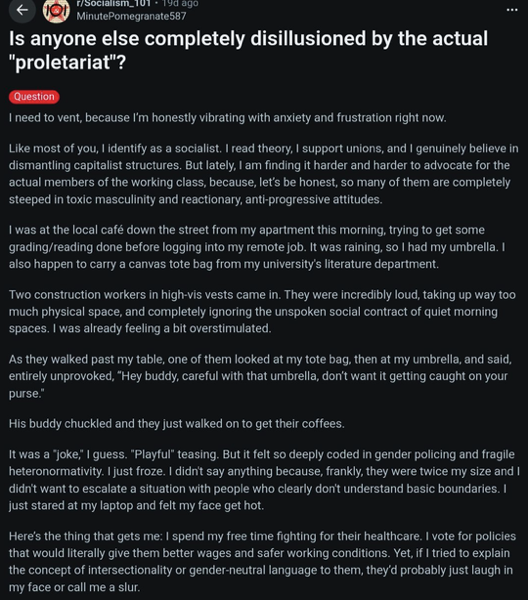
Either that, or staple your lips shut, ya puss-cake. Onwards.

Ahh, but is there more, you ask? Oh, you betcher.

In sum, then.
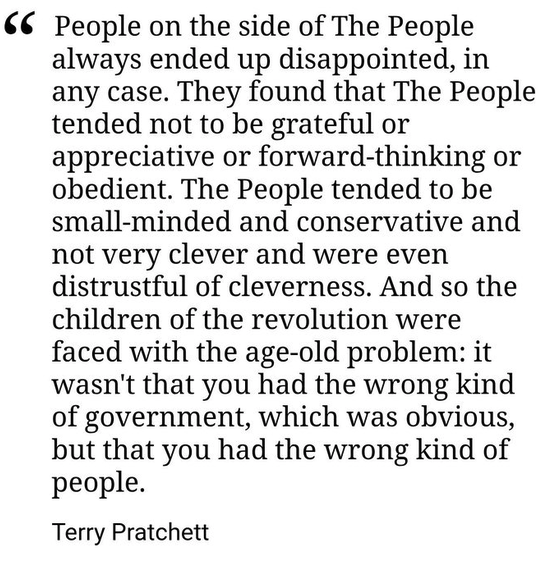
‘Nuff said.
Regardless of whether or not morale improves.
Taxpayer-funded trans dolls with removable genitalia to hit classrooms this fall for kids as young as 4 to ‘learn about different options’
They’re dolling up the trans agenda — and taxpayers are footing the bill.“First-of-their-kind” transgender dolls — complete with removable genitalia — will debut in some Minnesota classrooms this fall to kids as young as 4 years old.
The paper dolls, with gender-neutral names like “Sam,” “Rory,” “Avery” and “Parker,” have removable internal and external genitals, along with more than 100 interchangeable pieces of clothing, accessories and hairstyles — like a trans Mr./Mrs. Potato Head.
he goal is for kids to “learn about the different options that exist for who they can be,” according to a therapist at the University of Minnesota Medical School, which spent over half a decade developing the controversial project funded by lefty Minnesota Gov. Tim Walz.
Mighta knowed that doughboy swish would figure into this horseshit somewhere.
The trans dolls — which promise to “make gender fun” — will be made available to teachers, school counselors, pediatricians and mental health providers, according to a website of the “MyGender Dolls” company. It features an image of a boy doll wearing a dress and others in various states of sexual identity confusion.It’s not known whether parents — or children themselves — will be able to order a doll, or if they will only be marketed to professionals and schools. It is not known if parents will be able to opt out of such “therapeutic play” for their kids.
Of COURSE they won’t. That would be racist, sexist, fascist, and homophobic. H888RRRR.
“They will find anybody who’s in trouble and use this as a tool to say, ‘this is why you’re unhappy.’ This is absolutely grooming,” slammed Dr. Quentin Van Meter, past president of the American College of Pediatricians.
“The younger kids — many of them still believe in the Easter Bunny and the Tooth Fairy. And you’re then presenting them with paper dolls that kind of look fun, and you can change clothing, hair, genitals… It’s well beyond their ability to sort out fantasy from reality.”
When reached by The Post, a university spokesperson claimed no public funds were used “to support MyGender Dolls’ commercialization efforts.”
But when pressed on how much taxpayer money went to research and development of the dolls, and to the salaries of the professors involved in the project, the university refused to answer, telling The Post instead to file a freedom of information request.
Walz’s office did not return The Post’s request for comment.
Yeah, I just bet not.
And here, his troubles began.
Rand Paul Orders Fauci’s Lawyer Removed As Hearing Grows Chaotic
Former director of the National Institute of Allergy and Infectious Diseases — and apparently, serial perjurer — Anthony Fauci pleaded the Fifth Amendment and had his lawyer answer for him one too many times during a congressional hearing Wednesday.Senate Republicans are a lot of talk and no action most of the time. But it is understandable that Sen. Rand Paul (R-Ky.) would want to harangue Fauci after the release of Fauci’s journal logs at NIAID during the COVID-19 pandemic revealed that Fauci repeatedly lied under oath to Congress. Fauci understands that pretty much anything he admits is incriminating at this point, which is why he kept having his lawyer answer. But a congressional hearing is not the same thing as an ordinary court, and one’s lawyer cannot simply answer questions from a senator without permission nor sit in the incorrect seat.
One of the most damning contradictions between Fauci’s public and congressional testimony versus what he was saying in private regarded his journal admission that the COVID vaccines were not in fact effective at preventing transmission. In May 2021, Fauci said during an interview aimed specifically at children, “But if you get vaccinated, when the virus tries to infect you, the virus can’t because you are protected.” In November of that year, Fauci told Business Insider that he didn’t know what parents were waiting for to inject their toddlers with the COVID-19 vaccines.
I doubt there’s any sensible, sane sort who seriously expects Fauci will ever face real justice for his serial crimes against the nation, the US Constitution, and its citizenry (which, far as I’m concerned, could only mean death by hanging), or even prison time. But he’s by no means out of the woods all the same; for one thing, he has America’s Governator on his despicable, lying ass too.
Biden-Pardoned Fauci Now Faces Florida State Investigation
It seems Dr. Anthony Fauci, his rapid-fire invocations of the Fifth Amendment, presidential pardon and all, isn’t out of the woods yet. Here at RedState and pretty much everywhere else in the known universe where people are following all this, we’ve noted that the pardon doesn’t protect Dr. Fauci from charges at the state level.And, the first state to take action on that possibility? Florida. The Sunshine State is launching an investigation into Dr. Fauci and his economy-crushing COVID-19 debacle.
So, what crimes might Dr. Fauci be on the hook for in Florida? The state of Florida may seek charges for civil rights violations resulting from the pandemic restrictions, which were ruinous to small businesses and damaging to schoolkids, who missed out on months of in-person instruction. But those matters are generally civil cases, not criminal ones. Florida may seek to file a civil lawsuit, but for better or for worse, Dr. Fauci was a federal employee making decisions that affected national policy; it’s hard to see a state, any state, pursuing criminal charges against him.
Governor Ron DeSantis was a vocal opponent of the COVID lockdowns, and Florida was among the first states to drop those restrictions. But it’s a little hard to see that developing into a criminal case, one that would convince a grand jury to return an indictment.
But civil liability? That may well be another story.
Possibly the most gratifying thing I’ve read all day on this is an account which reported—after feebly pleading the Fifth over a hundred times; having his lawyer unceremoniously chucked out of the Senate chambers; and being closely, aggressively questioned by several Sentaors included Paul Hawly, and Moreno—that Fauci the Poisonous Dwarf slunk away from his ordeal with tail dragging and head bowed, his rep forever destroyed by his own hubris, greed, and vanity. Happily, Fauci’s “legacy” will not now be what he had so desperately hoped it might, but rather one of disgrace, dishonesty, and disfavor.
Fauci, far from being the courageous, über-intelligent superhero whi stars in his idle fantasies, is nothing but a mediocrity who—via deceit, malfeasance, and stark contempt for scientific rigor—maneged to parlay an over-extended career as a big-government bureacrat into personal wealth and, if not exactly fame, then notoriety anyway. If nothing else, no one should ever address him as “Doctor” again; he ain’t one—ain’t ever been, ain’t ever gonna be.
Update! Ross posts a Fauci Meme-Storm, and boy, is it EVER. Like the man says, somebody had to do it. My personal favorite:
Notorious serial criminal, Anthony Fauci arrives to answer for his crimes against humanity.
(Collab @BodhiAnneCole) pic.twitter.com/XczNChaMFH
— JeffXmemes (@JeffXmemes)
Fraudulent Fauci as Dr Hannibal Lecter, Rand Paul as Sophie Cunningham—I ask you, what’s not to like here?
Updated update! At the end of his Fauci Meme Shitstorm, Ross links to another great find that I’ve had sitting in an open tab for days now, just waiting for me to finally get around to it: Dr EVIL: Fauci, the Comic Book.
11She was only twenty-seven years old. In the final minutes of her life, she did not ask her family to comfort her. Instead, Honor Elizabeth Wainio used her last phone call to prepare them for a grief she knew she would never have to carry.
Everyone called her Lizz.
Just days before September 11, 2001, she had returned from a long-awaited trip to Europe. She attended a friend’s wedding in Florence, walked through Paris, and lit a candle in a church for her grandmother.
Lizz once told her mother that seeing Paris would make her life complete.
But she believed she still had decades ahead of her.
She was a successful district manager for Discovery Channel Stores, responsible for locations across New York and New Jersey. Friends remembered her as energetic, organized, and deeply affectionate, someone who approached life with urgency and joy.
On September 11, Lizz boarded United Airlines Flight 93 in Newark for a business trip to San Francisco. Forty passengers and crew members were aboard, along with four hijackers.
At 9:28 that morning, the hijackers attacked the cockpit. The aircraft suddenly dropped hundreds of feet, and passengers were forced toward the rear.
Then phone calls began revealing the truth.
Planes had struck the World Trade Center. Another had hit the Pentagon. Flight 93 was not part of an ordinary hostage situation. The passengers understood that their aircraft was also being used as a weapon.
At 9:53, Lizz called her stepmother, Esther Heymann, using an Airfone.
Her voice was calm.
She spoke about the people she loved and tried to ease Esther’s fear. During the conversation, she said that what was happening would be much harder for her family than it was for her.
Facing death, Lizz was thinking about those who would survive her.
She also said she was going to be with her grandmother.
The call lasted about four and a half minutes. Near its end, Lizz heard the other passengers preparing to move toward the cockpit.
“I have to go,” she said. “They’re breaking into the cockpit. I love you.”
At 9:57, the passengers and crew launched their counterattack. They rushed forward, knowing exactly what failure would mean.
At 10:03, Flight 93 crashed into a field near Shanksville, Pennsylvania. Everyone aboard was killed.
Investigators concluded that the hijackers intended to strike a target in Washington, most likely the Capitol. The passengers’ resistance prevented the plane from reaching it.
Today, forty wind chimes stand at the Flight 93 National Memorial, one for each passenger and crew member. Every voice remains separate, just as every life aboard was unique.
Lizz had plans, a career, people she loved, and a future waiting for her.
But when terror took everything else away, it could not take her compassion.
Thirty thousand feet above the earth, a frightened young woman chose to comfort others.
Honor Elizabeth Wainio died at twenty-seven.
But in her final minutes, she showed what courage can sound like when it speaks through love.
A bit more here on this lovely young woman, wantonly murdered by shitheel raghead terrorists on America’s second darkest day—the DARKEST being, hands down, when NYC shitlib fools disgraced themselves and their posterity forevermore by selecting the execrable Zoran MammyDamnJammy to be their mayor.
Happily, there are at least a handful of decent New Yorkers who, despite all odds, still do retain at least a modicum of honor, dignity, and self respect.
Families of 9/11 victims want to ban Mamdani from sacred 25th anniversary ceremony at Ground Zero: ‘unwelcome guest’
Families of 9/11 victims are demanding NYC Mayor Zohran Mamdani be banned from the 25th anniversary of the attacks at Ground Zero, branding him an apologist for Islamic terror whose presence would be an insult to the memories of nearly 3,000 people murdered.“Our objection is based on his public record — his failure to meaningfully acknowledge the horror of that day, and his employment of, support for, or association with individuals who have minimized 9/11, defended terrorists, or even suggested America ‘deserved’ the attacks,” said Giovanni Galante – whose 29-year-old wife Grace Catherine Galante was among 2,977 innocents killed by al-Qaeda terrorists.
Galante, 55, is one of the organizers of a petition drive that has collected over 1,100 signatures in a little over a week, including from at least 300 victims’ families.
Good on ya, sir, and heartfelt condolences on the loss so cruelly inflicted on you all those years ago by The Friends Of Mamdani.
1The fascinating tale of Dr James Salisbury’s renowned brainchild.
alisbury steak — seasoned ground beef patties mixed with breadcrumbs or other ingredients — was invented by James Salisbury, a New York physician who was fascinated by the relationship between diet and health. In the 1850s, he conducted a series of self experiments in which he exclusively ate a single food for a few days or weeks. His first test, a diet of only baked beans, produced disastrous results: “I became very flatulent and constipated, head dizzy, ears ringing, limbs prickly, and was wholly unfitted for mental work,” he wrote in The Relation of Alimentation and Disease (1888). Next came oatmeal and other staples, but it was ground beef, which he called “muscle pulp of beef,” that finally delivered the results he sought.
His prescription was simple: broiled beef patties, served with simple seasonings such as butter, salt, pepper, Worcestershire sauce, and lemon. This recipe, he wrote, “affords the maximum of nourishment with the minimum of effort to the digestive organs.” Vegetables, on the other hand, were not only unnecessary but also harmful in his view; Salisbury declared that vegetarians had “less nervous and muscular endurance than meat eaters.”
During the Civil War, Salisbury applied his nutrition theories to Union soldiers, who were fed a diet of beef patties instead of the usual hard biscuits, which tended to cause digestive issues. In the decades following the war, Salisbury’s diet evolved from medical prescription to one of America’s first fad diets, spurred on by the rise of wellness culture and increased public interest in healthy food. (Other notable 19th-century foods believed to promote health included graham crackers, which were originally intended to suppress the libido, and Kellogg’s cornflakes, which were served by their inventor John Harvey Kellogg at his world-famous sanitarium.)
World War I was a further boon for the Salisbury steak, as the name became preferred to the German-sounding “hamburger.” By the mid-20th century, the dish had become a blue-collar classic. Hearty, inexpensive, and easy to prepare in large batches, it appeared on diner menus and Navy cookbooks across America.
Then came the postwar boom — and with it, the rise of television. In 1953, the Swanson company introduced the TV dinner, a frozen meal packaged in a compartmentalized aluminum tray. Within its first year of production, more than 10 million trays were sold in the U.S., and the Salisbury steak was one of the TV dinner’s most enduring offerings. For a generation of midcentury families, Salisbury steak was the taste of modern life: a hot meal ready in minutes, eaten in front of the television.
The same forces that made Salisbury steak famous would later make it unfashionable. In the 2000s, Americans began to fall out of love with processed foods, in part due to growing awareness of their negative health effects. In 2012, New York City Mayor Michael Bloomberg proposed a ban on large sodas in the city, and First Lady Michelle Obama encouraged children to “Move!” The Salisbury steak, which was by then synonymous with microwaved TV dinners, fell victim to its association with cheap, unhealthy meals.
That said, not all processed foods suffered this fate, and another reason for Salisbury steak’s decline may be that it was outcompeted by its more convenient cousin, the burger, which rose to prominence as one of America’s most popular and iconic meals during the latter half of the 20th century. With the spread of fast-food chains such as McDonald’s and Burger King, many customers opted for the Salisbury steak’s handheld cousin when in the mood for a beef patty.
Though Salisbury steak has faded from the cultural spotlight in recent years, it is viewed with nostalgia by many who grew up with it and can still be found in home kitchens across America.
I ate a gracious plenty of those Swanson dinners featuring Salisbury steak when I was a kid, and it doesn’t seem to have done me any harm. Not that I know of, at any rate.
Via Insty, who quips, “Dr. Salisbury had your best interests at heart.” In stark today’s crop of Goosesteppin’ Left dietary/health/lifestyle scolds, who assuredly do not.
NOTE: In order to comment, you must be registered and approved as a CF user. Since so many user-registrations are attempted by spam-bots for their own nefarious purposes, YOUR REGISTRATION MAY BE ERRONEOUSLY DENIED.
If you are in fact a legit hooman bean desirous of registering yourself a CF user name so as to be able to comment only to find yourself caught up as collateral damage in one of my irregularly (un)scheduled sweeps for hinky registration attempts, please shoot me a kite at the email addy over in the right sidebar and let me know so’s I can get ya fixed up manually.
ALSO NOTE: You MUST use a valid, legit email address in order to successfully register, the new anti-spam software I installed last night requires it. My thanks to Barry for all his help sorting this mess out last night.
Comments appear entirely at the whim of the guy who pays the bills for this site and may be deleted, ridiculed, maliciously edited for purposes of mockery, or otherwise pissed over as he in his capricious fancy sees fit. The CF comments section is pretty free-form and rough and tumble; tolerance level for rowdiness and misbehavior is fairly high here, but is NOT without limit.
Management is under no obligation whatever to allow the comments section to be taken over and ruined by trolls, Leftists, and/or other oxygen thieves, and will take any measures deemed necessary to prevent such. Conduct yourself with the merest modicum of decorum, courtesy, and respect and you'll be fine. Pick pointless squabbles with other commenters, fling provocative personal insults, issue threats, or annoy the host (me) and...you won't.
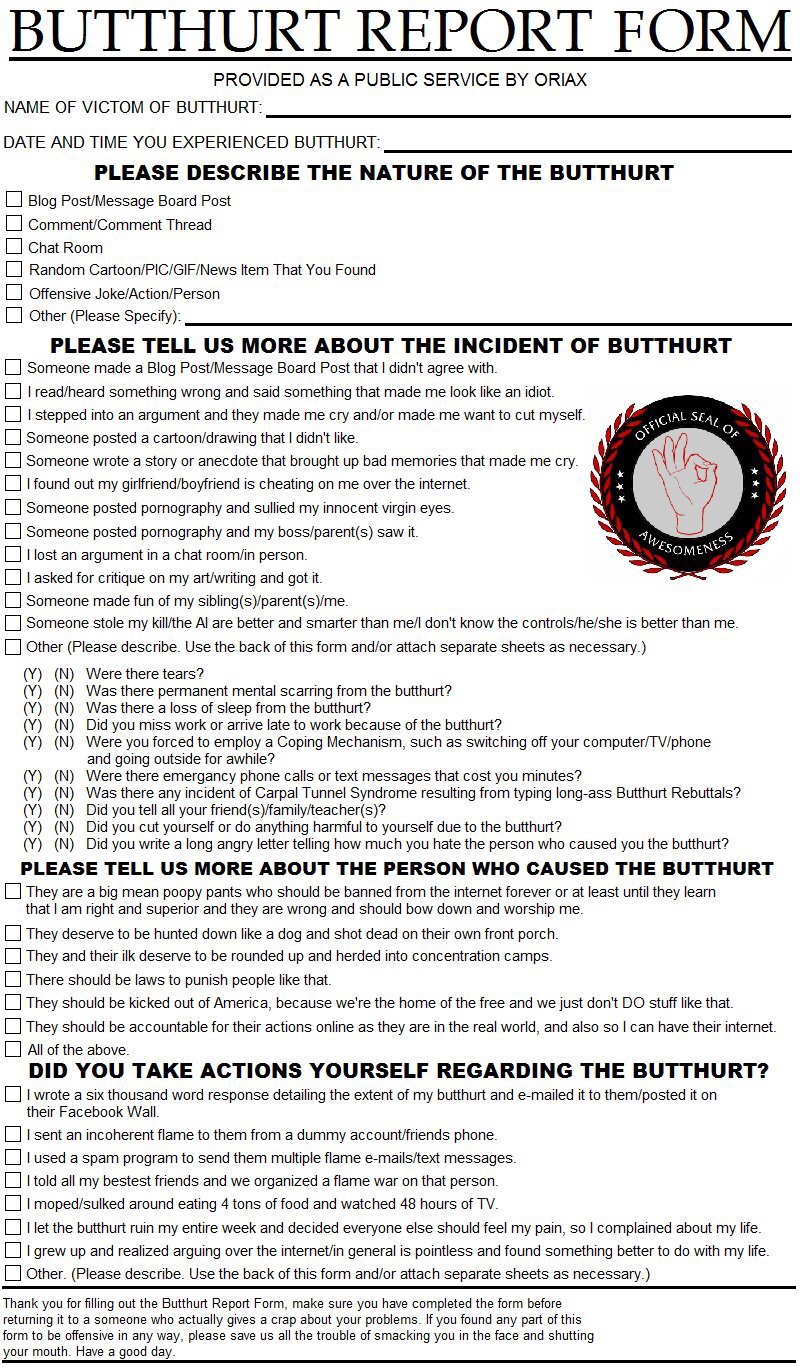
Should you find yourself sanctioned after running afoul of the CF comments policy as stated and feel you have been wronged, please download and complete the Butthurt Report form below in quadruplicate; retain one copy for your personal records and send the others to the email address posted in the right sidebar.
Please refrain from whining, sniveling, and/or bursting into tears and waving your chubby fists around in frustrated rage, lest you suffer an aneurysm or stroke unnecessarily. Your completed form will be reviewed and your complaint addressed whenever management feels like getting around to it. Thank you.
"Mike Hendrix is, without a doubt, the greatest one-legged blogger in the world." ‐Henry Chinaski



If you enjoy the site, please consider donating:

Email addy: mike-at-this-url dot etc
All e-mails assumed to be legitimate fodder for publication, scorn, ridicule, or other public mockery unless specified as private by the sender
 Click to embiggen
"America is at that awkward stage. It's too late to work within the system, but too early to shoot the bastards."
—Claire Wolfe, 101 Things to Do 'Til the Revolution
Claire's Cabal—The Freedom Forums

"There are men in all ages who mean to govern well, but they mean to govern. They promise to be good masters, but they mean to be masters."
—Daniel Webster
“When I was young I was depressed all the time. But suicide no longer seemed a possibility in my life. At my age there was very little left to kill.”
—Charles Bukowski
“A slave is one who waits for someone to come and free him.”
—Ezra Pound
“The illusion of freedom will continue as long as it’s profitable to continue the illusion. At the point where the illusion becomes too expensive to maintain, they will just take down the scenery, they will pull back the curtains, they will move the tables and chairs out of the way and you will see the brick wall at the back of the theater.”
—Frank Zappa
“The right of a nation to kill a tyrant in case of necessity can no more be doubted than to hang a robber, or kill a flea.”
—John Adams
"A society of sheep must in time beget a government of wolves."
—Bertrand de Jouvenel
"It is terrible to contemplate how few politicians are hanged."
—GK Chesterton
"I predict that the Bush administration will be seen by freedom-wishing Americans a generation or two hence as the hinge on the cell door locking up our freedom. When my children are my age, they will not be free in any recognizably traditional American meaning of the word. I’d tell them to emigrate, but there’s nowhere left to go. I am left with nauseating near-conviction that I am a member of the last generation in the history of the world that is minimally truly free."
—Donald Sensing
"The only way to live free is to live unobserved."
—Etienne de la Boiete
"History does not long entrust the care of freedom to the weak or the timid."
—Dwight D. Eisenhower
"To put it simply, the Left is the stupid and the insane, led by the evil. You can’t persuade the stupid or the insane and you had damn well better fight the evil."
—Skeptic
"There is no better way to stamp your power on people than through the dead hand of bureaucracy. You cannot reason with paperwork."
—David Black, from Turn Left For Gibraltar
"If the laws of God and men, are therefore of no effect, when the magistracy is left at liberty to break them; and if the lusts of those who are too strong for the tribunals of justice, cannot be otherwise restrained than by sedition, tumults and war, those seditions, tumults and wars, are justified by the laws of God and man."
—John Adams
"The limits of tyranny are prescribed by the endurance of those whom they oppress."
—Frederick Douglass
"Give me the media and I will make of any nation a herd of swine."
—Joseph Goebbels
“I hope we once again have reminded people that man is not free unless government is limited. There’s a clear cause and effect here that is as neat and predictable as a law of physics: As government expands, liberty contracts.”
—Ronald Reagan
"Ain't no misunderstanding this war. They want to rule us and aim to do it. We aim not to allow it. All there is to it."
—NC Reed, from Parno's Peril
"I just want a government that fits in the box it originally came in."
—Bill Whittle




 - Entries
- Comments
- Entries
- Comments
