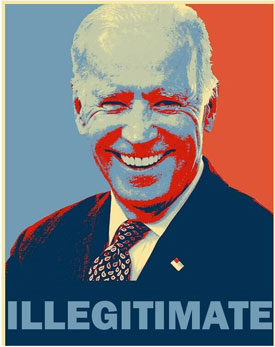
You’re either predator or prey

Fear is a useful tool, one that reliably gets results. If they don’t fear you, you’re doin’ it wrong.

The date was November 4, 1980. Ronald Reagan had just been elected president. Ironically, it was exactly one year to the day that over 50 Americans were taken hostage by Iranian zealots under Jimmy Carter. For the likes of Col. Charles W. Scott, it marked a full year in captivity at the U.S. embassy in Tehran.

Scott later recalled the frightened reaction of his Islamist captors to Reagan’s landslide victory: “I remember specifically when one of the guards came in and said, ‘Reagan is now the new president. What do you think will happen when he comes into office?’ I didn’t say a word, I just went ‘BOOM.’ And they said, ‘Really?’ And I said ‘Yeah, the first day he’s in office after the inaugural ceremony, he’ll go back to the White House and say ‘OK, tell the Iranians if they don’t let those hostages go by midnight tomorrow night, its war.’”

A few weeks later, on January 20, 1981, quite literally as Reagan was being inaugurated, every single hostage was released. The double headline across the top of the New York Times the next day said it all: “Reagan Takes Oath as 40th President; Promises An ‘Era of National Renewal’; Minutes Later, 52 U.S. Hostages in Iran Fly to Freedom After 444-Day Ordeal.”

Richard V. Allen was Reagan’s foreign policy adviser during the campaign and his first national security adviser. I interviewed Allen on this subject. He noted that Reagan had “sought to be very careful not to inflame” or undercut the Carter administration’s diplomatic work, refraining “from doing or saying anything that would jeopardize whatever the [Carter] administration was doing to secure the release of the hostages.” But, said Allen, “we … never discouraged any journalist from thinking that, better yet, writing or saying, in effect, ‘the Iranians had better watch out, make their deal with Carter now, because once Reagan is in office, things will be radically different.’”

The outgoing Carter administration enhanced the Reagan threat through a high-level team engaged in negotiations with Iran. In the words of one Carter official, the team was ordered to communicate that “it will be a whole new ball game after January 20.”

The Iranians were convinced. The hostages were released on January 20 — the very moment that Reagan was being sworn in as 40th president of the United States.

“There was never any doubt in my mind that the release, coming at the precise timing of the inauguration itself, was both a slap at Carter and fear of what would come next,” judged Richard Allen.

Why mention this lesson now? Well, fast forward to the Trump years, and Joe Biden.

The same thing happened with liberals and Donald Trump. They portrayed Trump as a trigger-happy madman with his itchy finger dangerously near the nuclear button — like Reagan, a reckless cowboy. And yet, Trump rarely used military power as president. He actually got along with crazy Kim in North Korea, so much so that some of his gushing statements about the little dictator were outrageously embarrassing. What Trump achieved in the Middle East, with the president and his team getting multiple Arab nations to recognize Israel (the first Arab recognitions since Egypt in 1979 and Jordan in 1994), was tremendous. It would have earned a Democrat the Nobel Peace Prize. But no awards for Trump, as liberals were too busy framing him as a wild man.

Well, that liberal caricature probably had a positive effect in deterring someone like a Vladimir Putin.

Going back to 2014, recall that Putin plowed into the Crimea a year into Obama’s second term, and that Obama had infamously in an open-mic moment told Putin lap-dog Dmitri Medvedev in 2012 that he would have “more flexibility after the election.” A grinning Medvedev ghoulishly and greedily replied, “Yes, I tell Vladimir!”

Vlad listened. Putin, nurtured in the KGB, learned to respect strength and prey on weakness.

Again, a president who understood this was Ronald Reagan. “If you were going to approach the Russians with a dove of peace in one hand, you had to have a sword in the other,” said Reagan. “We had to bargain with them from strength, not weakness.” Reagan’s motto toward the USSR was dovorey no provorey, Russian for “trust but verify.”

And yet, that was not what Barack Obama did. Obama had approached Putin with a dove in one hand and a bouquet of roses in the other. Obama showed weakness, and the Russians exploited it. Putin abused it.

Reagan took pride in the fact that the Soviets didn’t gain “one inch of ground” while he was president. Indeed, they did not — and that was so after they picked up nearly a dozen satellite states in the immediate years before Reagan, under Presidents Jimmy Carter and Gerald Ford.

Joe Biden is bringing us back to the Obama years and even the Carter years, when the Soviets invaded Afghanistan (seven weeks after the Iranians seized Americans as hostages in Iran) and picked up client states left and right.

Whatever Putin’s reasoning, it is undeniably striking that he didn’t seek to annihilate Ukraine under President Donald Trump. For four years, he hit the pause button. Now, his troops are everywhere in Ukraine. It happened under Joe Biden. That is a fact that cannot be shrugged off by Trump haters. In fact, fair-minded liberals get it: “OK, but if Putin thought Trump was really that supportive of him, why didn’t he invade when Trump was in office?” Bill Maher recently asked. “It’s at least worth asking that question if you’re not locked into one intransigent thought.”

It sure is.

Yet somehow—all the above being manifestly correct, easy to comprehend, and beyond debate—the Left will still go right on insisting that we rely on displays of abject weakness, groveling, self-abnegation, and piteous bowing and scraping to produce the desired bargain, restraint, or concession from our adversaries. It’s baffling, really. Are they just stubborn and stupid, clinging to failed strategies and tactics despite abundant historical evidence that they just don’t work—worse, that they often backfire, bringing about the exact opposite of the object they hoped for. Or is their knee-jerk, reflexive hatred for America and Americans—their implacable wish to see her brought low, their dogged belief that American failure and humiliation are GOOD things—so powerfully ingrained in them that bargaining from weakness is the only option their stilted intellects can conceive of, just as a matter of moral probity?

Are they simply bugfuck nuts? Madmen so secure in their anti-American, pacifist, collectivist catechism’s essential righteousness that it can, it will, it MUST ultimately prevail? Are they wilfully blind to observable reality? Forever locked into an untenable system of belief, an indefensible position, an unworkable ideology? Do they imagine themselves and their ideas so persuasive, so appealing, so obviously superior that sooner or later they will bring the rest of us into agreement with them, allowing them to get to work proselytizing the rest of the world, thereby finally bringing the dream of global socialism into real-world existence?

It’s a puzzle we’ll probably never put together, I guess. In light of that, we should halt any further effort to understand and/or accomodate them, and move on instead to suppressing them, to subjugating them. We should, at long last, teach them fear, re-implanting it so deeply in their minds that the mere thought of trying to regain their lost influence and power makes them involuntarily piss themselves.

1

What took you so long?

I expected this WAY before now, as y’all know.

I sense a disturbance in the force. In fact, I’ve been feeling the tremors for a while. Back in January, I wrote a column for American Greatness called “The Coming Dethronement of Joe Biden.” In it, I noted that Biden’s appalling performance as president would sooner or later—and probably sooner, given the ostentatious nature of his multifaceted failure—lead to his removal as president.

I should have added that it wasn’t Biden’s performance per se that would lead to his downfall. The problem, rather, was the way his performance was undermining his—and therefore his minders’ and puppetmasters’—political power. As Saul Alinsky, community organizer to the stars, noted, the “issue is never the issue.” Accordingly, the people who put Joe Biden in power—I cannot name them, but I know they are the same people who keep him in power—do not care about inflation, rising gas and food prices, COVID lockdowns or mask mandates, the porousness of our Southern border, the threat of war with Russia, or the myriad other issues that worry ordinary voters. I am quite certain, in fact, that the word “voters” brings a vaguely contemptuous smile to their faces.

They are not troubled by the suffering of the people, indeed, they approve of a certain amount of suffering. Suffering produces dependency; and dependency, in turn, is like an insurance policy for those who cater to it: the bureaucrats who fill the troughs that feed the populace. The point, of course, was never to end the dependency but to manage in such a way as to perpetuate and expand it. Joe Biden is an errand boy, a figurehead, in the metabolism of this great (not to say Great Society) act of political legerdemain.

The last several days have been full of wonder at the New York Time’s admission that, guess what, Hunter Biden’s “laptop from hell” was not—as Joe Biden claimed—“Russian disinformation.” Nope, everything that Donald Trump said to Leslie Stahl about it was true. Everything the New York Post said about it was true. Twitter and the rest of the regime media pronounced a damnatio memoriae on the Post and anyone who dared publicize the scurrilous story. The poor computer repair chap who found and publicized the dirt, political as well as sexual, on Hunter’s laptop was hounded and driven into bankruptcy. (Remember Jonah Goldberg on that poor fellow? I do. “Wait you believe the computer repair shop story? Like at face value?”)

Goldberg is but one of many who—if this were a better world and they were better people—would be scrambling madly to make a shamefaced apology to those of us upon whom the passage of time has now conferred total vindication.

Many people seem to think that the reason that the story of Hunter’s laptop—which is just as much about Joe Biden’s perfidy as it is about Hunter’s perversion—has emerged now is because it can no longer do any serious damage. The election is over, Biden won—at least, he was declared the winner, which is not quite the same thing, although it does mean that he gets to live at 1600 Pennsylvania Avenue.

But I wonder if there isn’t something else going on. The news is full not only of stories about the New York Times fessing up, sort of, about the contents of Hunter’s laptop, but also of stories about how Hunter is likely to be indicted for tax fraud. In one sense, that is not news. I wrote about it at the end of 2020 when Hunter announced, sotto voce, that he had been informed that he was being investigated by the tax authorities. But in another sense, I suspect, that news, like the revelation from the New York Times that, what do you know, all that stuff about Hunter’s laptop was on the level, like Joe Biden’s bizarre suggestion a couple of days ago that “everybody knows somebody” who has taken nude pictures of some lover and then used them to “blackmail” the person—all that has a different valence now that the Biden Administration is seriously underwater and there are no lifelines in evidence.

The issue is never the issue. I suspect that Joe Biden is being prepped for ejection. Exactly how it will happen I do not yet know. But he is on the threshold, or possibly has even passed the threshold, where he could appear to govern. His minders understand this. They must be the ones to replace him, otherwise they themselves risk being replaced, which would be intolerable. As I say, it’s not entirely clear yet how the defenestration will take place. Obviously, Kamala will have to be dealt with first, and she will be. Look for some ground softening stories such as the Times just served up about the laptop. They won’t be long in coming. 

T’is a consummation devoutly to be wished—not because it would solve any problems, not that it would fix anything, not that it would signal any monumental Ruling Class capitulation—simply because it would be a painful, humiliating slap in the face for two grubby little mountebanks who are long past due for one.

Grift most ingenious

Elon Musk vs Henry Ford.

Elon Musk is hailed as a “genius” by some.

And he is – but not in the way they mean it.

Like Henry Ford, Musk took something he didn’t invent that was essentially a curiosity and recast it in a different way. The difference being that when Henry Ford simplified the car by standardizing parts and mass producing them on an assembly line – as opposed to hand-building them, one at a time, as had been prior practice – the result was a much less expensive and far more practical car that almost anyone could afford to buy.

Musk did the opposite.

What Musk did was to rebrand the electric car as something sexy and “new” – even though the electric car concept is older than any Model T.  But he made it seem new – and very sexy – by making it very quick and very sleek, with all the very latest in the way of gadgetry. All of which served to distract from its unaffordability, impracticality and inefficiency.

But the problem remained. How to sell what most people couldn’t afford?

Enter Elon’s real genius.

Unlike Henry Ford, who appealed to the marketplace, Elon Musk appealed to the government. Not merely to subsidize what he was otherwise unable to sell but – far more fundamental – to promote the sell. That is wasn’t merely an indulgence to purchase (or subsidize) an electric car.

It was a kind of moral necessity.

This is the nature of Elon’s “genius” – as contrasted with that of Henry Ford.

I always sorta liked Musk myself; he’s pretty skilled at donning the mantle of gadfly now and then, which is always amusing to me. That said, I see little if anything to argue with in Eric’s assessment here, unlovely though it is.

Stable genius, or straight-up visionary?

Hey, anybody remember the welkin-rattling howl raised when That Ogre Drumpf™ said NATO was an outdated relic of WW2 that should be done away with, or at least ignored?

Nah, me neither.

NATO did, indeed, have a purpose when it was created: To become a military barrier against a land invasion by the USSR into Europe, and slow it enough for the United States to bring its own full military strength into play. And despite all the BS that had nothing to do with the NATO mission, like the Libya excursion or the bombing of Yugoslavia, its primary reason for existence is, and always has been, as a counter to The Russian Enemy.

Therefore, Russia must be an enemy. Otherwise, there is no reason for NATO to continue to exist.

Looked at from this POV, one might even wonder if it isn’t the NATO bureaucracy itself pushing the war with Russia in order to justify its continued existence. Bureaucracies are like cockroaches – almost impossible to kill. And they will fight anybody and go to any length to survive.

Another thing I recall, from the very earliest days of his presidency, is the overture Trump made to Putin in hopes of forging a US-Russia alliance to combat Mooselimb terrorism worldwide, a truly revolutionary proposition which Putin seemed to welcome heartily. Such would have been most salutary partnership had it come to fruition for all sorts of reasons, but instead ended up speedily strangled a-borning by the Shampeachment shitshow, which at the time seemed almost to have been ginned up specifically for the purpose.

A night in Hell

BCE posts on his stay in one of THOSE hotels; most of the saltier old road-dogs among us will need no explanation of what I mean by that, I trust. Naturally, BCE’s nightmarish and all-too-familiar story put me in mind of one of the single most atrocious dumps I can remember staying at: the Admiral Benbow Inn, in Memphis Tn. Regrettably, I made the mistake of DDG’ing the God-forsaken pit and wound up falling into the dreaded Search Engine Sinkhole, hitting links like a blow-junkie lab rat fiending for another sweet, sweet hit, sucked in by article after article chronicling the poor old Benbow’s rise and fall. Never woulda thunk it, but there’s some truly interesting history there, great gooey gobs of it. The backstory:

Dear Vance: Who the heck was Admiral Benbow, and what happened to all those motels here that were named after him? — J.F., Memphis.

Dear J.F.: Just like Colonel Harland Sanders with his Kentucky Fried Chicken empire, John Benbow (1653-1702) was a real person, an admiral in the British Royal Navy. During a long career at sea, he served as the commander of several vessels against various enemies, ranging from Barbary pirates to the French fleet, and I don’t have the time or energy to go into that here. Benbow died from injuries received in battle, with a biographer noting the cause of death was “the wound of his leg, never being set to perfection, which malady being aggravated by the discontent of his mind, threw him into a sort of melancholy.”

The admiral was buried in Jamaica, and his fame was so great that Robert Louis Stevenson, author of the 1883 classic, Treasure Island, named a tavern in his book the “Admiral Benbow Inn.”

Many years later, another enterprising gentleman in Memphis would do the same.

Allen Gary was born in Tupelo, Mississippi, in 1913. Somehow he ended up in Memphis, as so many men and women from the Magnolia State do. In the mid-1930s, he attended Central High School and Southwestern at Memphis (now Rhodes College). At some point, he met up with a business partner, George Early, and together they converted a nineteenth-century stable on Bellevue into a popular eatery called, quite naturally, The Stable. When it opened in 1941, it might be considered one of this city’s first theme restaurants. Not only was it decorated, inside and out, like a rustic barn, but the menu for this “Dispenser of Southern Horse-pitality” included such dishes as the Stagecoach, Hack, Hansom, Buggy, Surrey, and Sulky.

By all accounts, the Stable, located at Union and Bellevue, was a success, and quite a few readers have asked about it over the years, remembering good meals and good times there. But Gary and Early decided to branch out, forming other enterprises. Gary had befriended two of this city’s leading “hospitality men” — motel king Kemmons Wilson and drive-in operator Harold Fortune — and after serving for a time as manager of Fortune’s Belvedere, one of the chain’s largest and fanciest locations, Gary worked out an arrangement with Wilson to open restaurants at Holiday Inns around the South.

This wasn’t quite enough, though. In 1950, Gary and Early converted a brick cottage at Union and Willett into a cozy restaurant that they named the Admiral Benbow Inn. So the first Admiral Benbow in Memphis, or anywhere else for that matter, wasn’t a motel. Newspapers admired the new venture, noting that “its interior furnishings are completely modern in contrast with the fifteenth-century atmosphere.” Even though the tiny building sat just 20 feet from Union, “in the Terrace Room, eating pleasure blends with the busy traffic scene.” Just like in the fifteenth century!

At some point, it seems Early dropped out of this enterprise; I don’t know why. By 1960, Gary was operating 18 restaurants, an accomplishment that earned him a place in American Restaurant magazine’s Hall of Fame. A story about Gary in that publication — perhaps you saw it? — observed, “A restaurant operator whose receipts his first day in business totaled $7.10 [they are talking about the Stable] is today doing a business volume that exceeded $2 million in the fiscal year that just ended, operating restaurants in hotels in six Southern states.”

That still wasn’t enough for Gary. He next conceived Benbow Snack Bars, free-standing diner-type establishments, which often had little more than a counter and 12 stools, much like the nationwide chain of Toddle Houses. These were designed to be erected near motels that had no restaurant of their own, you see, but I was never able to determine how many Benbow Snack Bars were actually constructed. American Restaurant magazine, packed with helpful information, does say that Snack Bars “have been added in Memphis and in Laurel, Mississippi, and Gary is currently studying sites in 10 states” but didn’t say where, exactly, the Memphis locations were.

In 1960, Gary returned to his roots. He tore down his first venture, the old Stable, and erected the first Admiral Benbow Inn — this time a motel — at Union and Bellevue. The modern styling was certainly eye-catching, with lots of white concrete, bright colors, and suspended walkways linking what was considered this city’s first two-story motel. Of course, it included a restaurant along with a lounge called the Escape Hatch. He soon opened others — on Summer, next door to Imperial Bowling Lanes, and on Winchester, close to the airport.

As you can see from the images here, the Admiral Benbow Inn was certainly a nice-looking place and stood out from most of the hum-drum motels being constructed at the time. During its first years, it boasted occupancy rates of 100 percent. But for reasons that I don’t fully understand (since the Lauderdales never frequented such places), the motel developed a bad reputation. In fact, by February 2000, Admiral Benbow had declined to the point where my pal Jim Hanas wrote a Memphis Flyer cover story about his brief stay there. With a title of “Broken Palace: The Last Days of the Admiral Benbow,” you can tell it’s not a flattering portrait.

It was here, in fact, at the Admiral Benbow in Midtown that a fellow named Malcolm Fraser woke up one morning in 1986 to find himself without clothes, luggage, or money. Now this would be disconcerting for anybody, but Fraser just happened to be the former prime minister of Australia, in town for a business visit, and was supposed to be staying at The Peabody. The whole matter was never sorted out, but it’s typical of the decidedly unusual events that seemed to plague the Admiral Benbows in Memphis over the years.

So what happened to them?

Okay, so far, so…well, so dull, honestly. Aside from the mysterious Fraser saga, it’s the sort of dry, aggressively mundane stuff only a Memphian with an obssessive local-history fetish could find interesting, or maybe somebody who was being paid to act as if he had such a fetish. Hang in there though; we’re just about to hit the motherlode.

Memphis celebrates, occasionally even enshrines, its motels. The Lorraine has been encased for future reference as the National Civil Rights Museum; the Heartbreak Hotel, once a mere metaphor in the spiritual neighborhood of Lonely Street, now stands in literal glass and stone on Elvis Presley Boulevard; and the success story of Kemmons Wilson and Holiday Inns Inc. is eclipsed only by that of Fred Smith and Federal Express in the local mythology.

Even the dutiful Gideons have abandoned the Admiral Benbow at the corner of Union and Bellevue, however. There is no trace of either testament in the several drawers in room 245, one of which has had its front torn off and placed neatly inside it where the Bible ought to be.

The television is cockeyed from a failed attempt to rip it from its security mooring, although it doesn’t work so well anyway, and like most everything else in the room, it is rutted with burns from careless cigarettes and/or crack-pipes.

Seven doors down, a man was once stabbed with such a pipe by his so-called boyfriend, or so he said when, out of breath, he waved down a police cruiser at the corner of Madison and Cleveland. The boyfriend told a different story. He himself had been savagely beaten with the room’s telephone by the first man, he said, who had then stabbed himself with the crack pipe. He was only giving chase, he explained, so he could help.

The phone in 245 looks as though it may be the veteran of a beating or two. The plate over the keypad has disappeared, and much else in the room has been either picked clean or otherwise rendered useless. The cover of the heating duct leans beneath the sink. The bathtub faucet leaks hot water and cannot be made to stop. Pee-colored formica peels from the sway-topped sink and the flesh-colored stucco walls crack indiscriminately. The door’s security latch is no longer secure (nor any longer technically a latch, really), the hidden workings of the light switch are not hidden, and the peephole — the one you’re supposed to look through before, ever, ever opening the door — has been plugged with a tiny piece of cloth.

And not a Bible in sight, here when you really need one.

Unlike Memphis’ celebrated motels, the Benbow does not represent anything prized about the city or its history, anything people actually draw paychecks promoting. It is not a monument to the civil rights movement, the birthplace of rock-and-roll, or Memphis’ role as a universal crossroads.

Instead, the Benbow represents another side of the city, a side people draw paychecks keeping quiet, a side that’s as old as the city’s days as a rough river town and crime capital of the known universe.

It’s here that Little Pete, a 19-year-old gangsta from South Memphis, got pinched for shooting a man just off Elvis Presley Boulevard. Where a man once celebrated Valentine’s Day by flying into a drunken rage, trashing his room, and slapping his girlfriend around, all before 10 a.m. Where guests have occasionally tried to off themselves with excess anti-depressants, detergents, and razor-blades.

If, as everyone seems to agree, the Mississippi Delta begins in the lobby of The Peabody, then it just might end somewhere in the tomblike parking lot here at the Admiral Benbow.

The Benbow’s seediness comes only in part from its dilapidation. Part of it is a matter of architecture. The elevated rooms, once a clever parking solution, create a claustrophobic above-ground subterrain ricocheting with shadows and echoes. A series of catwalks connecting the motel’s four buildings makes you feel as though you may already be in prison, so, well, what the hell anyway. In urban planning lingo, these effects might be described pathologically, symptoms of a property that is “sick.”

Once, when the Monkees stayed here, the parking lot and catwalks were overrun by screaming, teenaged girls.

A half-naked woman lies bloody and motionless beside the bed. G-men let a tabloid photographer into the room to snap some shots of the corpse, of the spectacle of blood and breasts and the 9mm cupped in a cold hand.

Nothing serves to verify the Benbow’s status as a dive — with all the campiness that implies — quite like this scene from The Sore Losers, the burlesque allegory from local cult filmmaker Mike McCarthy.

Mid-scene, there is an establishing shot of the motel’s neon sign and marquee, and audiences are expected to get the joke. “Cheap applause for the local crowd,” McCarthy explains.

Everyone knows you haven’t slummed until you’ve slummed at the Admiral Benbow.

Although McCarthy had his car vandalized while filming at the motel, it didn’t keep him from putting out-of-town talent up here during the filming of his latest movie, SuperStarlet A.D., at least for a night.

“The surreal charm wears off when we realize the doors are broken,” co-star Gina Velour writes of the place in her diary of the shoot, which appeared in Hustler’s Leg World last year. “The moldy ceiling is hanging like fog, and there is a single, bare 60-watt bulb, just like in the movies. It’s the worst night I can remember in all my travels. I can’t do this for the next three weeks.”

And she doesn’t, demanding from McCarthy better digs in the Red Roof Inn up the street.

“They didn’t share my sense of humor,” McCarthy admits.

Evidently camp has its limits, even for aspirant B-movie starlets.

I have to say, Ms Velour’s Admiral Benbow experience closely corresponds with my own.

Even more fascinating Admiral Benbow lore at the linked articles—some of it amusing, some of it terrifying, none of it in the least shocking or too far out for Benbow survivors. And we are legion, because some years back just about every bar, theater, or other mid-level and below music venue in Memphis, as well as independent bookers and promoters, made it their practice to book hotel rooms for bands on tour at the Benbow. The place was filthy. It was dangerous. It was run down, literally falling apart in whole sections. And it was positively crawling with drunks, junkies, crackheads, hookers, johns, flim-flam men, muggers, and other fascinating specimens from every strata of Memphis lowlife, criminality, and dysfunction. There are roaches crawling up the walls of the rooms as big as your thumb—bigger, even. Go ahead, ask me how I know.

But for promoters and venue owners and such, the Benbow wasn’t entirely without its charms nonetheless. It was dirt cheap, and for people working that side of the music-biz street, cheap trumps all else. Especially when you know you don’t have to spend the night there your own self.

The first time a promoter tried to shoehorn us into the Benbow box, we took one look at our assigned room, looked at each other in horror, and agreed immediately that we would NOT be staying at this wretched shitpit after that night’s show, taking it upon ourselves to speedily flee to someplace fit for human habitation and just foot the bill ourselves, even though our contract rider called for two double-occupancy hotel rooms, comped. If I remember right, we ended up at a Red Roof not far away, likely the same one Gina Velour wisely decamped to.

Our next time in town, the guy who had booked us met us at the venue seeming quite pleased with himself at having procured our two rooms already, saving us the trouble of checking in. We pounced without delay: might these rooms happen to be at the Benbow, perchance? Sensing there was trouble afoot, his cheery face fell as he admitted that it was so. We informed him sharply that no, we would NOT be staying at the Admiral Benbow, neither tonight nor ever again. As a compromise measure, we WOULD be willing to hold off on starting the show until he got us rooms at an acceptable hotel, so he wouldn’t habe to miss anything.

It’s common knowledge in the rock and roll universe that when two touring bands hit the road together, even if only for a few days, there is a kind of accelerated bonding between the two camps which takes place, formed initially around all the experiences they have in common: days on end eating nothing but horrible food and the inevitable distress that comes along with it; hot, easy women in specific cities; crippling hangovers and how best to deal with ’em; where the closest liquor store might be, and who’s going to have to shag his ass over there after sound check but before downbeat to fetch a jug for the green room, and such-like topics. Included among these topics: the Admiral Benbow, and how incomprehensibly skeevy it was.

I mean, ALL of our peers knew the place; everybody had a horror story, each more grisly than the one before, and not a one of us doubted for a moment that every word was gospel truth. No one that had actually been there doubted, at any rate. Those who had lived to tell the tale KNEW the truth, having survived the trauma, learned the lessons, and earned the scars. The rest? Well, they’d be finding out soon enough, poor things.

Any hard-touring band that’s put enough miles under their asses can tell you that there are indeed places dotted all across the American road atlas which no normal person knows about, nor will ever see. We’ve all spent our share of sweaty, sleepless nights tossing, turning, and scratching our fresh insect bites in hotels and motels Normals wouldn’t even believe exist. But they do. Those squalid dens are indeed out there…WAITING.

Be afraid. Be very afraid.

Truth can be stranger than fiction

There once was a day when I would have straightaway laughed this off as straight-up paranoia, the worst sort of conspiracy-theorizing—something that can only be the product of a diseased mind.

But this is not that day.

Two interesting tidbits directly from Kyle’s defense attorney in his closing argument. One, Joseph Rosenbaum, who was carrying his belongings in a hospital bag, as if he had just been released from a mental health facility, and who was said to have just been released from a mental health facility, and who himself said on video he had just been released, “and wasn’t afraid to go back,” has no record of having been at any mental health facility or detention center, and neither the defense or the prosecution can account for his whereabouts prior to the riot. So the defense tried to locate where this guy came from, or where he was in the weeks prior to the riot, to show he was a mental headcase, but they couldn’t locate any info, despite him clearly having been under a hold somewhere, dealing with therapists of some sort and believing himself he was locked up. Make of that what you will.

Two, Gaige Grosskreutz was brought into the hospital amblulatory and conscious, but in shock with his bicep blown off, and somehow he ended up admitted  as an anonymous patient with no name, so his best friend couldn’t find him when he went to be with him. I doubt Gaige was thinking clearly enough in those frantic moments to request he be listed as a John Doe. I doubt the hospital, getting a rush patient in from the riots with his arm blown off, thought to hide his identity as they were trying to wheel him into emergency surgery. So how did he end up anonymized, even days later?

Now suppose the riot was a complex intel operation, being run from an underground command center many miles away, by intel professionals watching events live on their TV screens, like feeds from numerous “streamers” like Gaige who were running around with their phones, streaming the riot. Suppose that command center was giving orders to their operatives on the ground in the riot through hidden earpieces, using bounced signals from locally positioned repeaters brought in by “Antifa” commanders. Imagine the plan for that night was to make an example out of some patriot who was armed, to counter the images of armed patriots in body armor protesting the Cabal, and make those guys look less scary. Suppose that command center picked Kyle out of the video streams during the early moments of the riot, because he was clearly young, out of shape, naive to how things worked, and looked like a Cherry these seasoned Cabal assets could roll over.

In the trial we learned, that at just the wrong moment, whoever was protecting the CarSource suddenly bailed with no explanation as the crowd moved in (the defense said it in closing). Then, one of the “leaders” of the armed patriots asked 17 year old Kyle to go down there to take the position, and at the same moment, Kyle’s “buddy” in the buddy system the patriots were using, who had been assigned to him earlier (a forty something Army vet), suddenly disappeared inexplicably from the side of the 17 year old kid he should have felt responsible for. So Kyle was suddenly alone and could not find him, just as the order to head to CarSource came in. So Kyle went toward the CarSource alone on orders, where Joseph Rosenbaum was hiding behind a car waiting, and where the FBI had just moved its overhead drone and aviation units to that location to record everything that was about to happen.

What Cabal didn’t know was Kyle was under God’s protection, and just happened to be extra-sharp and highly cool under fire as well. So he smokes two Cabal protesters and cripples a third, all clearly in compliance with all legal strictures, before successfully exfiling and getting to safety. After everything plays out, nobody can say where Rosenbaum came from. Nobody can identify or locate crucial characters, like “Yellow Pants” and “Jump Kick Guy” (both terms from the trial), despite the FBI undoubtedly having the Identification of everyone present that night, and the videos going global. And when Grosskruetz gets admitted to the hospital, somebody knows this will be a clusterfuck, and has the authority to contact the hospital and make sure his name is removed from his admission records, so nobody can find him until they see all the videos, sort out how they are going to deal with it, and figure out what his story will need to be.

It feels like a mad scramble by command after a perfectly planned clock-work op targeting a cherry turned into an epic Goatfuck, and they needed to hide everything until they could figure out how how bad it was, and how they needed to handle it. After Kyle cleaned house, and command gave the order to shut down the riot and send everyone home right after it (why did the shooting not invigorate the crowd to riot even worse?), I will bet there were upwards of a dozen seasoned, high ranking intel professionals gathered in a conference room somewhere shitting bricks, grabbing all the video they could, and trying to figure out how they would keep this epic Goatfuck from blowing stratospheric. I would not be surprised at one point one said, “Well, at least tell me this little shit killed a black guy, so we have something to work with!”

All of that fits together far better as coordinated intel activity, than it does as a random series of events, and odd coincidences, which left Kyle all alone, in the middle of the mob, under attack, with multiple aviation over him.

One the one hand, William of Occam’s renowned Razor holds that when evaluating several competing explanations for the same incident or phenomenon, the simplest is likely to be the correct one. On the other, though, the Sherlock Holmesian Fallacy theory maintains that “When you have eliminated all which is impossible, then whatever remains, however improbable, must be the truth.” I dunno, people, you pays your money and you takes your choice, I suppose. One thing I AM sure of, though, is that none among us should fall into the trap of assuming that an ostensibly responsible and reliable federal agency such as Famous But Incompetent would never do such a harebrained, risky, and patently immoral thing. At this point, I think it safe to say that we should all know better than that by now.

3

The indispensible Patrick Henry

Having only recently posted a copious excerpt from his momentous “Give me liberty or give me death” address, I can’t argue with the proposition.

After finishing a biography titled, Patrick Henry: Champion of Liberty, by John Kukla, I am convinced that Mr. Henry, Colonel Henry, nay, Governor Henry is the real father of our country instead of the beloved General, President George Washington. As I become more familiar with the particular history of Old Dominion and her role and that of her leading citizens in the first war for independence, it seems that Patrick Henry was the actual indispensable man. It was his writings that first dared name the final object while others were still calling it treason. It was his resolutions that prepared Virginia to become economically independent and arm herself when England’s aggression first became apparent. It was his conviction and energy that moved the goal of independence forward among a people whose timidity and lack of vision made them reluctant to pursue it.

In cannot be disputed that Virginia lead the revolution, so it must follow that one of her leading residents must be credited with spearheading the charge, defining its course, and seeing it through to fruition. I submit that it was the unchallenged leader of Virginia at the time; the man whose influence trumped all others, Patrick Henry, who was the real author of an independent America. Neither Thomas Jefferson, nor George Washington held positions with influence great enough to rival Henry during the true formative years of early American government. Patrick Henry’s education, experience, talents, and temperament gave him more credibility in the colonies than any other man. Jefferson may have written the final founding documents of the country, but before Jefferson was Henry, paving the way. Washington may have taken the helm when the new constitution was in place, but it was during his years of leadership that the principles of independence saw immediate decay.

No doubt Henry’s greatest talents were in law and legislation. He had no rival when it came to articulating and persuading through the written word and oratory how the rights of men were to be upheld, and a significant amount of his contributions came during his years serving as a burgess in Virginia and on various legislative committees. His career as a lawyer gave him experience in the judiciary sphere and unique resilience when it came to discussion and debate of the issues of the day that many of his peers lacked. Neither was he was devoid of military knowledge and even reluctantly served in a military command when the thrust of the independence movement turned to combat maneuvers in Virginia. He was willing to serve wherever the cause needed him.

At the conclusion of the war and as attention turned to augmenting the government connecting the states, Patrick Henry stayed alert and informed in order to be prepared to protect the liberty of the people when changes were proposed.

And what relationship should my proposed ‘Father of our Country’ have to the adopted Constitution? Ever faithful to principles of liberty, he naturally opposed it. Regardless of the promises and assurances given by its proponents, Patrick Henry was the one who prophetically saw its flaws and the abuses that were inevitable. Perhaps it was his superior ability to observe and judge the hearts of the people around him that allowed him to see that the Constitution had too much potential to be construed by imperfect human nature. He knew that Virginia’s sovereign happiness would be destroyed by being under the same rule as regions different and hostile to her culture. He was right and his perception deserves to be acknowledged.

Why do men like Jefferson, Madison, and Washington take center stage? Similar to the fate of the South after the ‘Civil War’, those that won the war wrote the history. The Federalists won the ratification debate and became major players in the new government. Henry recedes into Virginia history working to remedy the threats to Liberty instead of taking the national limelight. When this man said, “Give me Liberty, or give me Death!” they were not just idle words.  He truly meant that Liberty was more important than anything else, even union, and he proved to be its greatest advocate until his death. Regardless of what America has become today, Patrick Henry represents its true spirit, the protection of individual rights, and the best of what it should be; free and independent states.

This short piece is from the Abbeville Institute, whose site I became aware of not long ago. It appears to be a top-notch resource for articles not only on America’s Founding, but also for current events; ideology and philosophy; and Southern-specific political and cultural history as well. Top-notch enough, in fact, that at present I have three more of their articles sitting in open tabs, awaiting their appearance here as soon as I can make time to git ‘er done. Until then, into Ye Olde CF Blogrolle with ye, AI.

Update! Okay, I’m gonna shirk my sworn duty to you folks a wee mite and commend your attention to these two excellent Abbeville posts without any commentary from me: this one, an in-depth account of the rise of representative government in Virginia and the men involved in its creation; and this one, a review of the first book-length treatment ever published on Spencer Roane, son in law of Patrick Henry and a staunch defender of Jeffersonian principle who has fallen into undeserved obscurity.

1

The Thrubbles, American-style

Alarming parallels.

The Irish Troubles is one of six models I’ve identified that could have (loosely) an American equivalent.

Of course, I’m not talking about Catholics versus Protestants, but a sectarian conflict featuring sporadic armed political violence where the government’s primary mission is peacekeeping followed by counterterrorism.

The Irish Troubles resulted in over 50,000 casualties and 3,500 deaths over a 30-year span (1969-1998). Armed violence was widespread across Northern Ireland, but this map illustrating the deaths of civilians and British Security Forces gives us a good glimpse of where casualty-producing attacks occurred.

One of my key assumptions for this model remains that armed political volence would be geographically limited. I wouldn’t expect much from, say, central Nebraska or northern Alabama, for instance, just like many areas of Northern Ireland had very few instances of armed violence over a 30-year span. I expect most places to remain… well, pretty quiet as far as fighting is concerned. (Criminality is another matter!)

A few things… First, civilian deaths are roughly equal to deaths of all belligerents. High civilian casualties are the norm for domestic conflicts, going all the way back to at least the 1500s. As French Renaissance philosopher Michel de Montaigne (1532-1592) observed, “In truth a forraine warre is nothing so dangerous a disease as a civill.”

Second, while the 1970s were by far the most violent, war-related deaths continued to stack up over the following decades. The total death toll of 3,483 works out to an average of 116 deaths per year, or roughly one death every three days. For 30 years. Low intensity conflicts, especially insurgencies and guerrilla wars, are often protracted. Nothing happening in the United States today signals that our own domestic conflict would be short lived.

Third, I’m still compiling the numbers of fighters as a percentage of the overall populace. The end result will show that a small percentage was actively engaged in the fighting at any given time. As we see in most low intensity conflicts, a small percentage actually takes part in the fighting, followed by maybe 5-15% of the total population involved in active support at some level, and everyone else is just trying to live their lives. I suspect that the American Troubles would be similar.

The real problem for most Americans will be the economic, financial, and monetary destruction that results from armed conflict. While you’d think that high unemployment would enable the mobilization of millions of military-aged males, the disruption to transportation, shipping, and production likely means that many Americans will be focused on week to week survival, as opposed to actively fighting.

The greater the operational tempo and mass of fighters, the greater logistics you need. This likely means that the number of fighters remains relatively small compared to the efforts required to support them. Again, less than 5%, maybe even less than 1%, is likely to be engaged at any time. (That’s still a lot of people.)

On that note, the United States population today is some 200 times larger than Northern Ireland was from 1969-1998. So could we see 200 times the death toll? Certainly.

Although I still maintain that there is simply no possible way to accurately predict where this is headed or how it’s all going to end up, Culper’s comparison with The Thrubbles (hey, I’m Irish all to hell and gone on my mom’s side, so I can say it that way if I want to, dammit) seems entirely apt to me, and just as likely to yield some useful indications as any. At the end of the day, though, the one and only sure thing is that it’s going to positively SUCK.

(Via WRSA)

4

WAKE UP, BLACK AMERICA!

You folks know by now that I am resolutely immune to the bizarre ((((((JOOOOOOOOOOO!!!™)))))) obssessiveness currently fashionable in certain other quarters, for reasons I’ve already gone through here plenty enough times. Being more of a William of Occam devotee, I’ve never really had any truck with conspiracy theorizing of any flavor, which admittedly has become a much more difficult mindset to maintain the last two years. But once in a VERY great while, a conspiracy theory comes along that is so damned compelling, so brilliantly conceived, so clearly beyond argument that no sensible soul could possibly do anything other than embrace it without reservation.

This would be one of those.

San Francisco State University Prof Says Jewish Pot is Making Black Men Gay
“It is Jewish genius that has helped…to weaponize the weed.”

Wesley Muhammad believes that the U.S. government and the Jews are using marijuana to make black men gay. The “Pot Plot” is a popular theory in Muhammad’s Nation of Islam cult.

At the Saviours Day Convention in Chicago, an official Nation of Islam event, Wesley Muhammad claimed that, “It is Jewish genius that has helped… to weaponize the weed so that it may effeminize the black male of America. And be clear, it is Farrakhan and the Nation of Islam that is standing in between the total demasculinization of the black man in America.”

Some years back, Wesley Muhammad’s lecture, “How to Make a Homosexual: The Scientific Assault on Black America” was canceled at a Philly black beauty expo because of its hateful content. But what wasn’t good enough for the 23rd Annual International Locks Conference, a black natural hair expo, is unfortunately all too welcome at San Francisco State University.

It’s not too surprising that a black “wholistic” hair expo has higher standards than the most antisemitic university in America. Or that Muhammad fits in so well at SFSU.

“It is clear that the two most powerful lobbies in America – the Jewish and the Homosexual – are hellbent on the information in this lecture, “How To Make A Homosexualm (sic)” NEVER makes it to the public’s awareness,” Muhammad complained on Facebook.

San Francisco State University has however been happy to provide Muhammad with a platform despite no shortage of ethnically Jewish and gay people on the faculty and in the administration.

Wesley Muhammad’s bio at the taxpayer-funded university notes that he is a lecturer in the Africana Studies Department of SFSU’s College of Ethnic Studies. It mentions his publications in the Final Call newspaper of the Nation of Islam hate group, and his book, “Understanding the Assault on the Black Man, Black Manhood and Black Masculinity” which contains thoughtful chapters such as “Why Saggin is Faggin” and “Birth of the Black Man (God)”. 

This one scores straight A’s all across the board: for creativity; for originality; for weaving widely disparate threads into a wholly incoherent narrative fabric; for entertainment value; for sheer bugfuck lunacy, it tops every category. I must confess that I haven’t read all of it yet, mainly because I can only get another ‘graph or so deeper in before keeling over in helpless laughter and having to start all over again.

Damn pesky JOOOOOZ, getting all the brothas hung up on de weeeit ‘n’ fucking dey shit up ‘n’shit! Nomesay’n? Yup, it takes a nation of millions to hold ’em back. WE WUZ KANGS ‘N’SHIT!!!

6
3

Happy Columbus Day Victory Over Indigenous Peoples Day!

The straight dope about the man, facts they don’t teach in government schools.

The explorer Christopher Columbus made four trips across the Atlantic Ocean from Spain: in 1492, 1493, 1498 and 1502. He was determined to find a direct water route west from Europe to Asia, but he never did. Instead, he stumbled upon the Americas. Though he did not really “discover” the so-called New World—millions of people already lived there—his journeys marked the beginning of centuries of exploration and colonization of North and South America.

Christopher Columbus, the son of a wool merchant, is believed to have been born in Genoa, Italy, in 1451. When he was still a teenager, he got a job on a merchant ship. He remained at sea until 1476, when pirates attacked his ship as it sailed north along the Portuguese coast.

The boat sank, but the young Columbus floated to shore on a scrap of wood and made his way to Lisbon, where he eventually studied mathematics, astronomy, cartography and navigation. He also began to hatch the plan that would change the world forever.

At the end of the 15th century, it was nearly impossible to reach Asia from Europe by land. The route was long and arduous, and encounters with hostile armies were difficult to avoid. Portuguese explorers solved this problem by taking to the sea: They sailed south along the West African coast and around the Cape of Good Hope.

But Columbus had a different idea: Why not sail west across the Atlantic instead of around the massive African continent? The young navigator’s logic was sound, but his math was faulty. He argued (incorrectly) that the circumference of the Earth was much smaller than his contemporaries believed it was; accordingly, he believed that the journey by boat from Europe to Asia should be not only possible, but comparatively easy via an as-yet undiscovered Northwest Passage. 

He presented his plan to officials in Portugal and England, but it was not until 1492 that he found a sympathetic audience: the Spanish monarchs Ferdinand of Aragon and Isabella of Castile.

Columbus wanted fame and fortune. Ferdinand and Isabella wanted the same, along with the opportunity to export Catholicism to lands across the globe. (Columbus, a devout Catholic, was equally enthusiastic about this possibility.)

Columbus’ contract with the Spanish rulers promised that he could keep 10 percent of whatever riches he found, along with a noble title and the governorship of any lands he should encounter.

Today, Columbus has a controversial legacy—he is remembered as a daring and path-breaking explorer who transformed the New World, yet his actions also unleashed changes that would eventually devastate the native populations he and his fellow explorers encountered.

The consensus view on Columbus the man is, and has been for many years, that he was in fact something of a grubby, treacherous little prick. I like the guy anyway, though, seeing as how the mere mention of his name usually reduces shitlibs to frothing paroxysms of rage, almost all of it centered on the “genocide” he unleashed on “Native Americans,” ie, the Red Injun. But the fact is, Columbus never even set foot on what we today know as American soil, thus never “genocided” any American Injuns, nor even set eyes on one to my knowledge. More little-known facts, randomly plucked from both hither and yon. First, the hither:

3. He Was a Cheapskate
On his famous 1492 voyage, Columbus had promised a reward of gold to whoever saw land first. A sailor named Rodrigo de Triana was the first to see land on October 12, 1492: a small island in the present-day Bahamas Columbus named San Salvador. Poor Rodrigo never got the reward, however: Columbus kept it for himself, telling everyone he had seen a hazy sort of light the night before. He had not spoken up because the light was indistinct. Rodrigo may have gotten hosed, but there is a nice statue of him sighting land in a park in Seville.

4. Half of His Voyages Ended in Disaster
On Columbus’ famed 1492 voyage, his flagship the Santa Maria ran aground and sank, causing him to leave 39 men behind at a settlement named La Navidad. He was supposed to return to Spain loaded with spices and other valuable goods and knowledge of an important new trade route. Instead, he returned empty-handed and without the best of the three ships entrusted to him. On his fourth voyage, his ship rotted out from under him and he spent a year with his men marooned on Jamaica.

5. He Was a Terrible Governor
Grateful for the new lands he had found for them, the King and Queen of Spain made Columbus governor in the newly-established settlement of Santo Domingo. Columbus, who was a fine explorer, turned out to be a lousy governor. He and his brothers ruled the settlement like kings, taking most of the profits for themselves and antagonizing the other settlers. Although Columbus instructed his settlers to make sure that the Tainos on Hispaniola be protected, during his frequent absences, the settlers rampaged the villages, robbing, raping, and enslaving. Disciplinary actions by Columbus and his brother were met with open revolt.

It got so bad that the Spanish crown sent an investigator, who took over as governor, arrested Columbus, and sent him back to Spain in chains. The new governor was far worse.

8. He Never Believed He Had Found a New World
Columbus was looking for a new passage to Asia… and that’s just what he found, or so he said until his dying day. In spite of mounting facts that seemed to indicate that he had discovered lands previously unknown, he continued to believe that Japan, China and the court of the Great Khan were very close to the lands he had discovered. Isabella and Ferdinand knew better: the geographers and astronomers they consulted knew the world was spherical and estimated that Japan was 12,000 miles from Spain (correct if you go by ship heading eastward from Bilbao), while Columbus held out for 2,400 miles.

According to biographer Washington Irving (1783–1859), Columbus even proposed a ridiculous theory for the discrepancy: that the Earth was shaped like a pear, and that he had not found Asia because of the part of the pear that bulges out towards the stem. At court, it was the width of the ocean westward that was in question, not the shape of the world. Fortunately for Columbus, the Bahamas was located about the distance he expected to find Japan.

By the end of his life, he was a laughingstock in Europe because of his stubborn refusal to accept the obvious.

Next, the yon:

7. He was stranded in Jamaica
When Columbus sailed for the New World for the last time, shipworms gnawed parts of his fleet, forcing him to abandon two ships and land on modern-day Jamaica. He and his crew were stranded, but the native Arawak Indians welcomed them and fed them for months.

8. A lunar eclipse saved Columbus in Jamaica
As months dragged on, Columbus’ crew mutinied, robbed and murdered some of the Arawaks. To quell the chaos, Columbus pretended to bring down the wrath of God. He had a copy of an astronomical almanac, which predicts a total lunar eclipse. Three days before the celestial event, Columbus requested an audience with the Arawak chief, saying that his God was angry for the lack of provisions for his men and that he would send a sign of his displeasure.

True enough, the moon turned a blood-red colour and terrified the natives. The Arawaks asked Columbus to intercede, promising to provide for them if his God restores the moon. Columbus pretended to pray in his cabin and emerged only when the eclipse has subsided. The Arawaks then provided for them until a caravel from Hispaniola arrived to fetch them.

9. Columbus didn’t prove that the Earth was round
Many credit the discovery of a round Earth to Columbus, but he wasn’t the first to prove it. Humans have known that the Earth was round since ancient Greece, so this wasn’t a surprising fact, even for Christopher Columbus. The Greeks observed the movements of the sun and other planetary properties to conclude that the Earth was a sphere. What he wanted to do was to create a sea route across the Atlantic towards Asia.

11. He miscalculated the Earth’s circumference
It’s a little-known fact that Christopher Columbus had many miscalculations during his journeys. He underestimated the circumference of the Earth by 25%. Also, his estimate of the naval distance to Marco Polo’s great port of Cathay was inaccurate.

12. His famous ships had nicknames
Columbus’ ships are known as Niña, Pinta and Santa Maria, but the first two are likely nicknames. In Columbus’ time, it was custom to name ships after saints and then give them a simpler moniker. The real name of Niña was Santa Clara, while Santa Maria’s nickname was La Gallega, after Galicia, where it was built. Pinta’s real name is unknown.

17. His death caused three decades of legal proceedings
When Columbus died, his heirs filed lawsuits known as the Pleitos colombinos against the Crown of Castile and Leon to assert the rewards for discovering the New World for Spain. Legal proceedings lasted three decades until the Crown granted honorific titles to Columbus’ grandson.

Whatever his personal flaws and failings, Christopher Columbus was inarguably a most intriguing man, as all great explorers tend to be. My own fondness for him dates back to my NYC days, when every Fall the annual controversy over the Columbus Day Parade would predictably erupt like a modern-day Mt Vesuvius. In one corner: Kid Shitlib, spluttering hysterically for all the stale reasons you’d expect. In the other: Dago Red, who had long since adopted Columbus as the symbolic Trevi Fountain from whence springs all Italian-American heritage, history, and pride.

Oh, but the yearly battle over the big Columbus Day Parade was epic, with Kid Shitlib rope-a-doping in hopes of permanently ending this shameful celebration of racism, imperialism, slavery, and genocide through legal and political maneuvering. Meanwhile, the pugnacious Dago Red would charge doggedly straight into the fray, vowing that if the City didn’t fund, manage, and endorse the shindig officially this year, they’d do it all themselves and to hell with everybody. Which, I’m sure they would have at that, if only for spite, and more power to ’em.

On the glorious day itself, the Eyeties would emerge en masse from their Mulberry Street enclave to march alongside the Parade as it wound its way along Fifth Ave, their backs straight and jaws jutting in open challenge to the shitlib pussies to man up and start some shit. The shitlibs, in keeping with their own rich Columbus Day tradition, would limit expression of their disapproval and protest to weeping piteously in terror, pleading for mercy from the intimidating Wop palookas enjoying the parade, flapping their noodle-like arms in frustration, then speedily retiring further uptown to take part in the annual public beat-off contest on the steps of Saint Ignatius Loyola church.

Yep, those were the days alright.

Update! Because OF COURSE he did.

On Monday, Ron DeSantis did something which surely steamed the Left.

Again.

Florida’s governor signed a proclamation honoring Columbus Day.

“Columbus Day commemorates the life and legacy of the Italian explorer who made Europeans conscious of the existence of the New World,” he observed, “and whose travels opened the door for the development of European settlements in the Western Hemisphere, which would ultimately lead to the establishment of the United States of America.”

That ain’t even the half of it, as you will find out when you click on over and read the rest.

4

Stalin’s war, Stalin’s win

Reviewing a book that offers a different perspective on WW2.

The goals of the Western Allies in World War II were to defeat Hitler and prevent a hostile power from entrenching itself in Europe and Asia, threatening the freedom and survival of the West. From a narrow perspective, the unconditional surrender of Germany and Japan in 1945 fulfilled this objective: it was a victory for the United States, the United Kingdom, and their allies, and we celebrate V-E Day every May 8 and V-J Day on September 2. But for a large number of nations that fought against Berlin and Tokyo, at enormous sacrifice, 1945 is a dark year that ended one tyranny only to be replaced by another one, the Communist one, which was (and continues to be) no less vicious and in fact was much more lasting and pervasive. Stalin replaced Hitler. Or, to put it in the context of World War II, Stalin was the clear winner of that conflict. It was his war, and he got the most out of it.

This is the argument of a new book, Stalin’s War, by a prolific and excellent historian, Sean McMeekin of Bard College. The author is already well known, having written highly readable and incisive books exploring the role of Russia, the Ottoman Empire, and Germany in the origins of World War I. In his new work, he focuses on Stalin, his objectives, his tactics, his actions, and, above all, his ability to obtain from his Western counterparts everything (and more!) that he wanted. The book presents the story of Stalin’s success that brought an enormous human cost to his own people and to those who came under Communist domination, as well as an enduring geopolitical cost. Through this war, Stalin succeeded in anchoring Soviet power and influence over Eurasia, benefiting from the frailty of European powers. Germany was obviously reduced to rubble by 1945, but even the victorious powers, from France and the UK to the other smaller states across the continent, were mere shadows of their former selves. Stalin gained strategic real estate and the tools, looted from Europe or given to him by the United States, to turn Russia into an industrial superpower. The conditions for the Cold War were in place, and in the immediate aftermath of the war, the possibility that Stalin could become the master of Eurasia was not out of the question. And, for the U.S., victory in 1945 meant not a satisfying and prolonged age of peace, but the beginning of a new and massive investment in preserving its security and the stability threatened by the Soviet Union.

The story presented in such a way is not new, and its broad contours are accepted by most, except those who still see Communist ideology and the USSR as a benign progressive force or those who blame American post-war support of Western Europe for the Cold War. But McMeekin digs deeper and his goal is to change two pervasive myths. One presents Stalin as a paranoid dictator bumbling across the European chessboard, getting caught unprepared for Hitler’s aggressive intents, and then rising to the historic occasion and motivating his people to fight the “Great Patriotic War” to liberate Russia and the adjoining lands from the Nazis. In brief, a dictator to be sure, but a naive one with a great patriotic heart backed by a Russian nation willing to accept great sacrifices.

The other myth is of a strategically wise leadership of Franklin D. Roosevelt and Winston Churchill, skillfully making their moves across the world’s map, negotiating with a vast array of strategic partners (including Stalin) and organizing bold military actions that ultimately lead to the 1945 triumph. Neither myth, however, is entirely correct, as McMeekin brilliantly argues backed by abundant facts supplied through impeccable research.

After a look into Stalin’s acquisitive designs on Western Europe, all undone by Hitler’s doomed invasion of the USSR in 1941, we direct our attention still further Westward.

McMeekin then focuses on how the Western allies, Churchill but especially FDR, abetted Stalin’s ambitions. This part of the book is fascinating and depressing at the same time. In a nutshell, Stalin obtained from FDR more than he expected: territory, influence, and materiel. And he did not give anything in exchange for it because FDR and his advisors never asked him for it. For instance, FDR supported the Lend-Lease program, putting his friend Harry Hopkins in charge. Under this program of military aid, the United States supplied a massive amount of weapons, trucks, airplanes, tanks, foodstuff to the Soviet Union in the months of its greatest need, as German troops were driving deep into Russia while the vaunted Soviet armies were melting away. Without such aid, the USSR would have likely been unable to stop the German onslaught and certainly would have been incapable of mustering the resources necessary to push westward. Hence, in this moment there was a good strategic rationale for the American support of Stalin’s defensive efforts against Nazi Germany.

But the problem was that FDR—and Hopkins—went much further than simply buttressing a collapsing Soviet power. The most stunning mistake—a policy willfully pursued by FDR—was that Stalin was never asked for anything in exchange for this material aid. The United States had the upper hand because the Soviets were desperate for any help and would have paid a price for these goods. As McMeekin comments, FDR “could have asked any price: payment in cash, by loan, or in kind; political concessions inside Russia; or promises from Stalin of better behavior abroad, such as abandoning his spying operations in Washington or offering token support for the US-British war against Japan. Instead, the Americans simply gave and demanded nothing in return aside from a vague, nonbinding promise of loan repayment beginning five years after the war was over, at no interest.”

Such a naivete could have been the result of FDR’s belief in his personal capacity to persuade people. But, at best, FDR profoundly misunderstood Stalin, despite the evidence of Soviet actions and even of Stalin’s own words and behavior toward the US President. FDR thought that he could build goodwill with Stalin. As he put it, “I think that if I give him everything I can and ask for nothing in return, noblesse oblige, he won’t try to annex anything and will work with me for a world of democracy and peace.” This is the point where naivete became stupidity.

With certain classifications of Western liberal, the distinction between naivete and stupidity is so thin it’s not worth the bother of making. They’re conjoined twins, constantly shifting and bleeding over one into the other, staggering clumsily about like a dancer uncertain of his stage cues. Sooner or later, though, the Libtard can be relied upon to close this pointless ballet with both feet planted squarely on Stupid. In reality, though, is that he started there, and never ventured any meaningful distance from it. Read the rest for further details of Stalin’s willful humiliation of the hapless, grossly-overmatched clown Roosevelt, and what Uncle Joe’s deftly stolen victory ended up costing the entire world, in blood and treasure.

2

The Blame Game continues

Gotta admit, here’s a culprit I hadn’t really thought of before. But after reading this, I can’t really say it’s all that much of a stretch.

So who is to blame for the current Afghanistan fiasco?

There is plenty of blame to go around. President Biden, for sure. President Obama, yes. And the second President Bush, yes, for the insane mission of nation-building, trying to install a Western-style democracy in a land that was wholly unsuited for it.

But here is a name nobody is mentioning but should. That name is…Ronald Reagan.

Yeah, I know, I know. Just slow your roll a little, and hear this guy out.

I hate saying that. I supported the sainted Reagan rabidly back in the day, and I still do in many ways. But now, in retrospect, I see Reagan as the ultimate culprit for the current fiasco. History may yet look to Ronald Reagan’s decision to intervene in Afghanistan as his biggest mistake.

But, gee, Reagan’s decision sure seemed like the right decision at the time. I certainly supported it.

The Russian war in Afghanistan consisted of three phases. Phase 1: The Russians invaded with a classical WWII army — and promptly got their backsides handed to them. The USSR lost Phase 1.

But the Russians learned their lessons and for the next phase used a modern strategy of helicopters and other air assets to obliterate the Mujaheddin. It worked. The USSR won Phase 2 and, as a result, completely controlled the country. The Mujaheddin were exiled across the Khyber Pass in Pakistan, licking their wounds.

Phase 3 can be summed up in one word: Stinger, as in Stinger missiles. With Stinger missiles, which Uncle Ronnie gave them, the Mujaheddin took air control away from the Russians, drove them out, and the rest is — not only history, but now current events, too.

For a short time, the USSR had built a classical Marxist state in Afghanistan. So what are the hallmarks of such a regime?

A police state — yes. Brutal suppression of dissent — yes. Lots of suppression of human rights, lots of imprisonment, lots of executions, lots of corruption — yes, yes, yes.

But now think of what else it means.

Suppression of organized religion. In this case, this isn’t gentle, harmless Christianity we’re talking about. Rather, this is jihadist Islam. This would have been suppressed savagely, not least because, unlike Christianity, such an Islam really is a threat to a secular, atheistic state.

So, inside this classical, secular, atheist Marxist state, there’d have been no room at all for al-Qaeda or the Taliban or ISIS. Afghanistan would never have become a world base for Islamic terror. There never would have been an attack on 9/11.

Here are other hallmarks of Marxism, and these are positive, at least in the context of a medieval Islamic nation: universal health. Universal education, and for girls as well as for boys.

If Marxism had been allowed to prevail in Afghanistan, its women would have been immensely better off than what actually happened to them.

It might sound ugly and cruel, but at this stage of things I can’t honestly say I give much of a shit about what might happen to women in ANY Moslem shithole. And while we’re being brutally honest here, I also can’t say I care much more about the fate of the thousands of American State Dept personnel who are stuck there, either. Same goes for “our Afghani allies”—translators, ANA soldiers, etc.

Yes, I do agree that they’ve been stabbed in the back—betrayed and ruthlessly abandoned by a faithless, heartless “ally.” So stipulated. But see, those poor, hapless Afghanis made the same mistake a goodly number of Normal Americans here at home still make: their conception of what the USA—specifically, the US government—is and what it actually is are, shall we say, at variance. WIDE variance.

Tens of thousands will die horribly at the hands of some of the most vicious, barbaric monsters the race is capable of producing because of all this. I’m sorry for that. I wish it wasn’t happening. But there’s also not one damned thing I can do about it. For those doomed souls who acted on their misplaced faith that the wholly-evil US government would have their backs and honor its promise to protect them, the sad fact is this:


There is a silver lining to this whole clusterfuck, however tarnished. If nothing else, after Biden’s Big Afghan Adventure, there can be NO excuse for not recognizing the true nature of the US federal government—what it is; what it does; what its intentions are; what it actually gives a shit about, and what it doesn’t. The mask has been ripped away for good; there’s no longer any way to conceal the ugly truth. The more people awakened by the revelations of this past week, the more likely that corrective action will be taken, and the sooner it will happen. If so, we’ll all be better off for it.

1
1

The most interesting man in the WORLD!!

Handlers drag Stutterin’ Jaux out into public view, hilarity ensues. Not that THAT could possibly come as any kind of surprise by now.

White House Struggles To Explain Biden’s Claim About Driving 18-Wheelers

Oh, they’re actually going to bother trying to “explain” this lapse into his typical state of mental confusion, are they? Assuming they do, and I don’t why they would really, I’m betting on the old “it was a joke” standby. That well-worn chestnut always seems to take in the rubes.

The White House is struggling to explain President Joe Biden’s claim that he has driven an 18-wheeler truck, Fox News reported.

“I used to drive an 18-wheeler, man,” Biden said on Wednesday. “I got to.” The president claimed he had driven the massive trucks before while visiting a Mack Truck facility in Pennsylvania, according to Fox News.

The White House didn’t respond to an immediate question from the Daily Caller News Foundation about evidence towards this claim.

Of course they didn’t. I mean, what could they possibly say?

Also left unexplained by White House goons was Jaux Corpsicle’s claim that, during the earliest days of his long and storied trucking career driving for Precion Tool Company in his home town of Memphis, he spent a lot of his off hours at Sun Studios with the legendary Sam Phillips—the man who produced the recording of “My Happiness” that Biden did as a birthday gift for his mother Gladys, which launched his career as one of the world’s most iconic rock and roll singers.

After the men in the long white lab jackets “escorting” Biden at the Mack plant tried desperately to steer their befuddled charge back on track mentally, the ***”””President”””*** launched into a rambling reminiscence of the very first days of his ***”””Presidency”””*** back in 1776, when he personally and singlehandedly penned both the Declaration of Independence and the US Constitution in less than half a day.

Upon being queried by reporters about whether and when the Great Man might sit down to write his memoirs, Biden suddenly turned beet-red with rage at the imaginary slight. “COME ON, MAN!! I did that years and years ago,” the ***”””President”””*** angrily exploded, swinging his withered arms frantically around his head as if he’d been suddenly beset by a swarm of blowflies. “The title of it was, I think, My Personal Best umpty-tumpty-tiddly something or other, can’t remember. But over time, my book became better known as simply the New Testament. Sold a hell of a lot of copies, too, once I gave that Gutenberg feller a few pointers and we got that printing press of his working right again, I tell ya what.”

The White House press corpse fell to its knees at these startling revelations, every voice raised in hosannahs of praise and humble gratitude for what must surely be the greatest leader ever to bestride this poor planet, hailing him as the mighty colossus—verily, the King of Kings—he so truly is.

1

The ground-level view

If you’ve noticed that what the people Salena Zito calls “our cultural narrative-makers” are reporting is quite often at odds with your own daily meatspace reality, particularly life as she is lived in small-town and rural America, well, it ain’t just your imagination. Since this is a relatively short piece and there’s no way to do it justice with some niggardly copy ‘n’ pastery, I’m just gonna repost the whole thing, with my apologies to Ms Zito and the good folks at American Greatness for the misappropriation. It’s an important story she’s telling, I think, and deserves to be brought before as wide an audience as possible.

Seeing America from the Ground
OTTAWA, Ohio—This is not a story about politics. Instead, it is a story about America and how sometimes, you can discover something new when you try to absorb the country’s character one mile at a time and when you take in a place on its own terms and not simply the terms of wherever you came from.

A couple of weeks ago, a native Long Islander who has called New York City his home for half a dozen years took his first trip to the Midwest for a news assignment to discuss what he found different about the way of life out here.

He flew to both Chicago and Detroit to learn about this foreign land.

The social media criticism of the resulting story was swift and brutal. The piece wasn’t any worse than the typical story flyover country folk read about themselves. But the oddest thing was that he tried to find the “Midwest” solely in the big cities of Chicago and Detroit. The true measure of the Midwest begins somewhere near the Pennsylvania state line.

Had he driven the 21 hours and 18 minutes it would take on the back roads between New York City and Chicago, he would have had one heck of a story to write about the country and the Midwest.

Jim Thorpe, Pennsylvania, is a beautiful town surrounded by the mountains of Pisgah Ridge and is dotted with architectural styles that range from Federalist, Greek Revival, Romanesque Revival, and Queen Anne to Richardsonian Romanesque. How the former town of Mauch Chunk was renamed for the Native American sports legend is, in microcosm, the story of this town: the ingenuity of civic leaders who deeply care about preserving a place in a changing world.

Then, at the Ohio-Pennsylvania border, by some measures the official threshold of the Midwest, he would have found himself in Ashtabula, Ohio. There, he could have begun his education as to how the Great Lakes Midwest has struggled and adapted to the tides of progress and technology that have stripped it from its robust industrial past as a major port city and railroad hub.

Deep poverty, crime, and despair, associated with the collapsed inner-city neighborhoods of Chicago and Detroit, would have greeted him in a different form had he driven down Lincoln Highway and found himself in Ford Heights, Illinois. Once a blue-collar, middle-class black suburb, Ford Heights has died so hard, it has been consistently the poorest suburb in America since the beginning of this century.

It’s also one of the most dangerous places in the state. The violent crime rate is so high, it is unimaginable to not be a victim of crime if you live here.

I remember the first time I came through this town nearly a decade ago and found a makeshift altar on the side of an abandoned gas station lined with bottles of hard liquor, candles, a wilted red rose and the word “love” spelled out with decals. I wept for all of the loss that happened here. A visitor here, with his or her eyes open, learns quickly that deindustrialization is colorblind in sowing despair.

For the majority of my career as a journalist, I have had the opportunity to report on this country from the vantage point of taking the back roads to get from point A to point B for whatever assignment I was given.

I found early in my career in covering politics that parachuting into a city for an event or an interview or a rally or an election gave me little understanding of what was happening in the region. Yet if I made my way there, taking the back roads, I was able to see how things were changing—for better or worse.

When I stopped to talk to people, I learned early on that listening was much more important than talking and that my duty was not to report their stories from my perspective or experiences but instead from theirs.

The story of America isn’t exclusively the story that comes from the perspective of larger cities. Unfortunately, it often appears that way because those are the bases of our cultural narrative-makers: news organizations, institutions, academia, think tanks, major-league sports, and entertainment.

They are so disconnected from most places that it would astound them if they took the time to get on the road and ask them how they feel about the issues of the day. They don’t want their police departments defunded. They want their bridges and roads fixed and their water to be clean. They don’t want critical race theory jammed down their children’s throats. They are horrified at how political the military has become and are worried about the long-lasting impact of the crisis at the border.

They are good neighbors. They love God and aren’t ashamed to show it as much as they like pickles in their beer and ranch dressing on everything.

Whether you take a ride for half an hour, half a day, an entire week, or even a month, there is more good than not out here in this country, despite what you may read in the New York Times or the Washington Post; it cannot be seen or smelt or heard or felt with a mask on in an airplane. It can be experienced if you take the time.

As the saying goes, you can’t report on a country you’ve never been to yourself. Zito, bless her heart, has long been doing the job MFM “journalists” just won’t do. Kudos to her for that.

Back in my road-dog days, there was an outfit from Chicago called Three Blue Teardrops. They were briefly label-mates of ours; we played with ’em a bunch, stayed at their house a few times when we were playing Chi-town, and got to be very good friends with the guys. Hell, we even covered some of their songs, one of them being this ‘un:


Another 3BT tune we did:


According to 3BT’s singer/guitarist Dave Sisson, they were once being hollered at during a show to play that one, and Dave flatly refused to do it. When I asked him why he’d done that, since the song had always been one of their most reliable late-night house-bringer-downers, he told me he considered our version so good as to be the very last word on it, and that he now thought of “Long Hard Night” as a Belmont Playboys song. I was flabbergasted by that one.

Now, the reason I bring the Teardrops up at all is that when they were out on the road, they always went with what I considered an ingenius approach: routing and timing everything to allow for taking those side-roads and byways Zito talks about above, rather than the frantic, get-there-quick-as-you-can interstate dash much more common among harried, hungover road warriors. Whenever our paths would cross, Dave and his crew would wax rhapsodic about having visited the Cadillac Ranch in Texas, or seeing the World’s Biggest Ball of Twine, or what have you. They NEVER took the interstate. For the Teardrops, see, touring wasn’t only about doing shows, making money, selling CDs, or getting your music in front of as many disparate audiences as you could. It was also about enjoying the ride—about experiencing as much of Real America as they could squeeze in, between gigs.

That had never occurred to me before Dave told me about their way of doing things, and after he did I was kinda envious. For instance, the BPs drove within shouting distance of Gettysburg I don’t even know how many times…but never did we have enough time to make a stop and tour the battlefield, which every one of us in that van would LOVED to have done. Hell, my brother even drove up there on his own hook once to do the tour. But I’ve never been, and almost certainly never will now.

Three Blue Teardrops had it right, as does Zito. The true American story can’t be found on TeeWee, the internet, or the interstate highways. It’s out there still, but you gotta take the backroads to get there.

1

Pay heed or die

Some serious sagacity from one of contemporary America’s most perspicacious, sober, and capable writers: Claire Wolf.

Over the years, when people have asked me, “Is it time yet, Claire?” my response has always been something like this: It may be moral to ‘shoot the bastards’ who kill freedom, but this isn’t the time. It doesn’t make tactical or strategic sense. Violence now will only make things much, much worse.

That’s still my strong conviction. To any members of the Deep State trolling the ‘Net desperately searching for those elusive “domestic terrorists” they’re so determined to locate invent: I’m a useless target for you. I don’t advocate violence except in self-defense and I dread seeing anybody, especially freedomistas, start a shooting war.

My hope is, as always, that a bloated, overreaching government will ultimately undermine itself and fall non-violently, as the Soviet Union did. It already seems well on its way.

But lately I’ve been asking myself if perhaps I’m in denial about the depth and urgency — and the possibilities — of our situation.

—-

I’ve been reading the book Comrade X sent me, American Insurgents, American Patriots by T.H. Breen. It focuses on the way ordinary citizens drove the colonies toward revolution, ultimately forcing the more famous leaders to step up and lead.

A large part of it so far concerns the Intolerable Acts and public outrage over them.

Many histories of the Revolution, IIRC, trace a steady growth of resistance from the Stamp Act through the Townshend Acts through the Boston Massacre through the Boston Tea Party through the Intolerable Acts to Lexington and Concord and on to the Declaration of Independence. Maybe so, but Breen positions the Intolerable Acts as the straw that broke the proverbial camel’s back. What Britain accurately but inadequately called the Coercive Acts turned ordinary, respectable farmers, lawyers, craftsmen, and housewives from angry — but loyal! — British colonists into an outraged force of active, uncompromising, and sometimes ruthless American insurgents.

One thing that struck me as I read was that both sides labored under delusions in the months leading up to the passage of the Acts in the spring of 1774. After the Boston Tea Party on December 16, 1773, American colonists, especially in Massachusetts, held their breath. They knew punishment would come, but not what form it would take. Because most information about British politics arrived in the form of imported and re-posted newspaper articles, colonists believed the British people were sympathetic to their cause and therefore that punishment would be limited and probably focused only on the guilty.

That was their delusion. Or one of them. They also held a long-cherished a belief that they were the legal, intellectual, and moral equal of any Englishmen, and that their fellow Englishmen saw them in the same light as they saw themselves.

They didn’t realize how implacably — if ineptly — British power brokers were against them. They didn’t realize that much of the English public, and especially the elite, looked down on them as being barely steps above the “savages” they lived among. They were, in short, viewed as the “deplorables,” “bitter clingers,” and “neanderthals” of their day.

While colonists waited and held high hopes, the government of King George III and Lord North decided to crush Boston by closing its harbor and place all of proud, self-governing Massachusetts under the direct supervision of agents of the crown. Listening only to their own self-interested contacts, parliament, lords, and king concluded that a) the ignorant rabble of Boston could be easily starved into submission and that b) nobody outside of Boston would step up in defense.

British authorities assumed the citizens of rural Massachusetts would blame Boston troublemakers, not the British government, for any problems that befell them as a result of the Coercive Acts (which the short-sighted British never considered might be intolerable, because subjects would be forced at gunpoint to tolerate them). Furthermore, and fatally, they assumed residents of the other 12 forever-squabbling colonies would regard the whole mess as a local New England matter and wouldn’t defend their neighbors or, heaven forbid, any general principles of liberty.

Those were their delusions.

While the colonists quickly realized how wrongly they’d judged the British government, the British government never did quite get A Clue about how it had misjudged the colonists.

From the moment the Intolerable Acts were brought across the Atlantic, the colonists were roused into such radical action that British authority was virtually demolished outside of cities, at least in New England. From late spring 1774 to April 19, 1775, resistance was fierce, spreading, and increasingly organized. Yet even once the shooting war began on that fateful spring day, some British officials and loyalists were shocked, truly shocked, that mere colonists had the temerity to shoot at British soldiers. (I saw statements in evidence of this stunned cluelessness at Minuteman National Park during my visit.)

British authorities and functionaries had been warned. They had been subjected to years of mostly polite resistance, followed by a year of decidedly impolite resistance. Yet many simply couldn’t believe it when Americans not only stood their ground against the greatest army in the world, but crouched behind stone walls and emerged from boulder-strewn hillsides to wage a new kind of — unsporting! unfair! — warfare against their smug, conventional, and “superior” masters.

Both sides began in denial. One side rapidly shook off denial and acted accordingly. The other — hidebound in its conventionality, its authority, and its certainty of rightness — couldn’t get over its delusions.

—-

Ours is very unlike the situation of our colonial forebears. They knew each other. They were neighbors, fellow parishioners, fellow militiamen, fellow small-town residents, sharers of mutual interests. They hugely outnumbered their would-be rulers, who had to cross an ocean to impose their will. They shared pride in self-government, in self-sufficiency (yet also in their economic contributions to the British homeland), in their historic rights. They aimed to be beholden to nobody. They eschewed debt. They would have found government handouts repellent, if they thought of them at all.

Unlike moderns, the insurgent colonists had more spies operating within British ranks than the British ever managed to insert into their ranks. Before the shooting began, they faced a limited number of British government officials in their midst and were able to intimidate and unseat them with sheer force of numbers that seem incredible to us, looking back on the sizes of the towns and villages of the day. They knew who the ardent loyalists and traitors in their midst were and were able to keep an eye on them as crises heated up.

We have no such advantages. We have the disadvantages of being under an extreme authoritarian — now wannabe totalitarian — government that is not only thick in our midst, but which oppresses with overwhelming numbers, with bevvies of armed agents from random agencies, and with unthinkable surveillance and control capabilities. And this coercive monstrosity is abetted by a populace that it has largely custom-schooled, propagandized, and above all bought off with virtually limitless supplies of funny money. This is a populace highly disinclined to bite the hand that feeds.

Anybody who imagines they can rise up and “shoot the bastards” now and gain the widespread public support any insurgency needs to succeed is delusional.

Yet…sometimes the “wrong” time to rise up turns by fate into the exact right time to rise up. And its hard to tell when the wrong time is truly, disastrously wrong and simply brings more oppression and when the wrong time is ripe to become right.

Out of so many lessons from the history of our Founding that Real Americans would benefit from studying closely, Claire has just spelled out the most vital one of all. We ignore it, and the others, at our mortal peril.

(Via WRSA)

CF Archives

Categories

Comments policy

NOTE: In order to comment, you must be registered and approved as a CF user. Since so many user-registrations are attempted by spam-bots for their own nefarious purposes, YOUR REGISTRATION MAY BE ERRONEOUSLY DENIED.

If you are in fact a legit hooman bean desirous of registering yourself a CF user name so as to be able to comment only to find yourself caught up as collateral damage in one of my irregularly (un)scheduled sweeps for hinky registration attempts, please shoot me a kite at the email addy over in the right sidebar and let me know so’s I can get ya fixed up manually.

ALSO NOTE: You MUST use a valid, legit email address in order to successfully register, the new anti-spam software I installed last night requires it. My thanks to Barry for all his help sorting this mess out last night.

Comments appear entirely at the whim of the guy who pays the bills for this site and may be deleted, ridiculed, maliciously edited for purposes of mockery, or otherwise pissed over as he in his capricious fancy sees fit. The CF comments section is pretty free-form and rough and tumble; tolerance level for rowdiness and misbehavior is fairly high here, but is NOT without limit.

Management is under no obligation whatever to allow the comments section to be taken over and ruined by trolls, Leftists, and/or other oxygen thieves, and will take any measures deemed necessary to prevent such. Conduct yourself with the merest modicum of decorum, courtesy, and respect and you'll be fine. Pick pointless squabbles with other commenters, fling provocative personal insults, issue threats, or annoy the host (me) and...you won't.

Should you find yourself sanctioned after running afoul of the CF comments policy as stated and feel you have been wronged, please download and complete the Butthurt Report form below in quadruplicate; retain one copy for your personal records and send the others to the email address posted in the right sidebar.

Please refrain from whining, sniveling, and/or bursting into tears and waving your chubby fists around in frustrated rage, lest you suffer an aneurysm or stroke unnecessarily. Your completed form will be reviewed and your complaint addressed whenever management feels like getting around to it. Thank you.

CF Glossary

ProPol: Professional Politician

Vichy GOPe: Putative "Republicans" who talk a great game but never can seem to find a hill they consider worth dying on; Quislings, Petains, Benedicts, backstabbers, fake phony frauds

Fake Phony Fraud(s), S'faccim: two excellent descriptors coined by the late great WABC host Bob Grant which are interchangeable, both meaning as they do pretty much the same thing

Mordor On The Potomac: Washington, DC

The Enemy: shitlibs, Progtards, Leftards, Swamp critters, et al ad nauseum

Burn, Loot, Murder: what the misleading acronym BLM really stands for

pAntiFa: an alternative spelling of "fascist scum"

"Mike Hendrix is, without a doubt, the greatest one-legged blogger in the world." ‐Henry Chinaski

Subscribe to CF!

Support options

Shameless begging

If you enjoy the site, please consider donating:

Correspondence

Email addy: mike-at-this-url dot etc

All e-mails assumed to be legitimate fodder for publication, scorn, ridicule, or other public mockery unless specified as private by the sender

Allied territory

Alternatives to shitlib social media: A few people worth following on Gab:

Fuck you

Kill one for mommy today! Click to embiggen

Notable Quotes

"America is at that awkward stage. It's too late to work within the system, but too early to shoot the bastards."
Claire Wolfe, 101 Things to Do 'Til the Revolution

Claire's Cabal—The Freedom Forums

FREEDOM!!!

"There are men in all ages who mean to govern well, but they mean to govern. They promise to be good masters, but they mean to be masters."
Daniel Webster

“When I was young I was depressed all the time. But suicide no longer seemed a possibility in my life. At my age there was very little left to kill.”
Charles Bukowski

“A slave is one who waits for someone to come and free him.”
Ezra Pound

“The illusion of freedom will continue as long as it’s profitable to continue the illusion. At the point where the illusion becomes too expensive to maintain, they will just take down the scenery, they will pull back the curtains, they will move the tables and chairs out of the way and you will see the brick wall at the back of the theater.”
Frank Zappa

“The right of a nation to kill a tyrant in case of necessity can no more be doubted than to hang a robber, or kill a flea.”
John Adams

"A society of sheep must in time beget a government of wolves."
Bertrand de Jouvenel

"It is terrible to contemplate how few politicians are hanged."
GK Chesterton

"I predict that the Bush administration will be seen by freedom-wishing Americans a generation or two hence as the hinge on the cell door locking up our freedom. When my children are my age, they will not be free in any recognizably traditional American meaning of the word. I’d tell them to emigrate, but there’s nowhere left to go. I am left with nauseating near-conviction that I am a member of the last generation in the history of the world that is minimally truly free."
Donald Sensing

"The only way to live free is to live unobserved."
Etienne de la Boiete

"History does not long entrust the care of freedom to the weak or the timid."
Dwight D. Eisenhower

"To put it simply, the Left is the stupid and the insane, led by the evil. You can’t persuade the stupid or the insane and you had damn well better fight the evil."
Skeptic

"There is no better way to stamp your power on people than through the dead hand of bureaucracy. You cannot reason with paperwork."
David Black, from Turn Left For Gibraltar

"If the laws of God and men, are therefore of no effect, when the magistracy is left at liberty to break them; and if the lusts of those who are too strong for the tribunals of justice, cannot be otherwise restrained than by sedition, tumults and war, those seditions, tumults and wars, are justified by the laws of God and man."
John Adams

"The limits of tyranny are prescribed by the endurance of those whom they oppress."
Frederick Douglass

"Give me the media and I will make of any nation a herd of swine."
Joseph Goebbels

“I hope we once again have reminded people that man is not free unless government is limited. There’s a clear cause and effect here that is as neat and predictable as a law of physics: As government expands, liberty contracts.”
Ronald Reagan

"Ain't no misunderstanding this war. They want to rule us and aim to do it. We aim not to allow it. All there is to it."
NC Reed, from Parno's Peril

"I just want a government that fits in the box it originally came in."
Bill Whittle

Best of the best

Finest hosting service

Image swiped from The Last Refuge

2016 Fabulous 50 Blog Awards

RSS feed

RSS - entries - Entries
RSS - entries - Comments

Boycott the New York Times -- Read the Real News at Larwyn's Linx

Copyright © 2026