
Raise a glass!
I’ll drink to that.
Most of today’s regulatory framework for alcohol traces back to the immediate post-Prohibition years. The basic assumption was that alcohol consumption is bad but unavoidable. The goal, then, was to regulate in ways that led people to drink less, via high taxes and inconveniences, without returning to the bootleggers and speakeasies of the disastrous Prohibition era.
Though things have lightened up a bit since then, that’s still the basic philosophy today. Alcohol discussions tend to turn on things like liver damage, impaired driving, violence and so on.
These negative consequences are real. But as Slingerland makes clear, they aren’t the whole story. There are a lot of less-heralded positives.
Given the downsides, alcohol consumption must also offer some advantages, Slingerland reasons, else it would have died out. But it hasn’t. In fact it’s hard to find successful civilizations that don’t use alcohol — and those few that qualify tend to replace it with other intoxicants that have similar effects.
Drinking doesn’t just make us feel good,
Until the hangover sets in.
it also makes us get along better,
Until the brawl breaks out.
cooperate more effectively
Until the obstreperousness spills forth.
and think more expansively.
Until the blackout occurs.
Of course, drinking isn’t all upside, but that isn’t the point. The point is that it’s not all downside, either — yet we regulate it, essentially, as if it were. We need a more balanced approach.
Said a mouthful there, Glenn.
And it isn’t just alcohol. As our culture has veered in an increasingly bossy and punitive direction, the tolerance for any sort of downside is vanishing. The “playground movement” at the beginning of the last century argued “better a broken arm than a broken spirit.” Today’s society takes a different approach.
Indubitably so…and there’s a reason for that, too. In present-day Amerika v2.0, broken spirits are the goal, the real point of the whole exercise. Why? The better to oppress you with, my dear. Docile slaves are much easier to lord over than resentful, belligerent ones, you see. The bottom-line problem propping all this foolishness up? The deep-seated Progressivist aversion to any and all risk.
During the pandemic, we saw a degree of safety-ism that discounted the value of humans getting together in the face of tiny or even notional risks, leading to absurdities like ocean paddle-boarders being arrested for paddling maskless. There’s much more value in the activity than risk in being unmasked at sea.
The list of cases where killjoys focus excessively on the negative is huge, and anyone reading this can think of many examples. But what do we do about it?
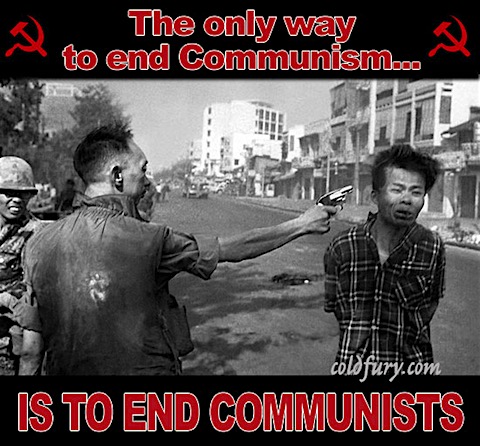
Ain’t but the one thing: start killing the killjoys. It really is the only way to be rid of them for any meaningful length of time, although even that isn’t permanent.











 - Entries