See ya, wouldn’t wanna be ya
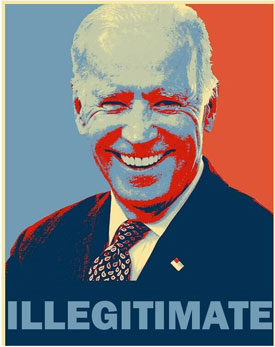
Unexpectedly, inadvertently, and for the first and only time in his entire useless existence, senile alleged “President” Grampy Fingerbang has done the right thing.
Good Riddance, Afghanistan
merican forces are finally departing Afghanistan. While Donald Trump had promised to end the inconclusive war there, he eventually gave in to the pleas of the defense and intelligence community and continued the war. Other than a few dozen more dead Americans, and a few more hundreds of billions of dollars up in smoke, it’s not clear what these additional years of effort achieved. Now Joe Biden has finally acknowledged the political and military reality: if we haven’t lost, we certainly are not winning or making any progress.One of the most remarkable things about the last few weeks is how utterly brittle the Afghan security forces and government have turned out to be. After billions of dollars spent on training, equipment, and support, the Afghan National Army is abandoning large bases, along with state-of-the-art guns, optics, and military equipment. These are now in the hands of the Taliban. For all the talk of our Afghan partners and their heroic national commitment to democracy, none of it turned out to be worth much when the training wheels were taken away.
It is not even clear if the American-supported Afghan government will last as long as the Soviet supported regime, which held on for three years after the Soviet withdrawal in 1989.
While it is clearly time to leave, it is worth thinking for a moment about why the entire Afghanistan mission, particularly after 2002, was a fool’s errand.
The mission became distorted over time. After 9/11, Americans wanted revenge. That mission was a simple one: punish the Taliban, destroy al-Qaeda, and capture or kill Osama bin Laden. Within a month of the attacks, our troops were in the field.
The campaign featured a novel operational approach. Defense Secretary Donald Rumsfeld wanted to show the military that it needed to learn to do more with less. His concept of “transformation” limited troop numbers, a feature of what was called the “Revolution in Military Affairs.” This theory proposed that the combined effects of high-speed communications, sophisticated sensors, and precision air power, would succeed where the traditional military’s risk-averse, heavy footprint would fail.
At first it seemed Rumsfeld and the revolutionaries were right. Very quickly, the Taliban melted away under pressure from American special forces, the Afghan Northern Alliance, and a fusillade of precision guided bombs in the months after 9/11.
But the first hint of trouble appeared soon thereafter. In the Battle of Tora Bora and later in Operation Anaconda, the Army’s lack of artillery (on Rusmfeld’s order) and the lack of sufficient blocking troops allowed the lion’s share of al-Qaeda, including Bin Laden, to slip away and obtain refuge in Pakistan’s lawless tribal areas. He wouldn’t be killed for another decade.
Unable to use our forces in our nominal ally’s territory, the United States and NATO emphasized the secondary aspects of the mission. They got to work on “nation building.” Political and military leaders defended this approach as enlightened realism, because al-Qaeda flourished at the extremes, in either weak states or politically repressive ones. Developing governing institutions and security forces, while expanding human rights to women and minorities, would create enduring stability and reverse the conditions in which al-Qaeda previously thrived.
This was an ambitious strategy, made twice as hard by the artificially low levels of troops. It became even more challenging after the start of the Iraq venture, which put Afghanistan on the backburner until the 2009 surge. Afghanistan is a famously violent and tribal place, where disparate tribes only unite under the banner of Islam to expel foreign invaders. The American concepts of democracy and liberalism were a message that worked at cross purposes to our efforts to obtain legitimacy and security. After all, these changes slowed down the decision-making of the Afghan government, while also alienating many Afghans, Taliban or not.
The biggest mistake we made in Afghanistan was presuming we had to turn the Middle East into an American-style democracy in order to have peace. We presumed we had to rectify the root causes in order to maintain national security. The same scenario played out in Iraq, Libya, and Syria. In all of these cases, our efforts did not increase our security or enhance stability, and sometimes made things worse.
More limited and realistic options were available, including the old fashioned punitive raid. Wrecking a place sends a message too, a message of deterrence. Because we viewed it as our duty to lift up the Afghans—strange people with whom we have no historical or other connections—and because no one wanted to admit the flawed foundations of the war, we ended up there for 20 years, long after most of al-Qaeda had decamped for Pakistan.
Even accepting the strategic premise, it’s not clear that anything we did enhanced stability or reduced international terrorism. Afghanistan has been in a state of civil war since our arrival. ISIS also materialized in the meantime. Al-Qaeda is still around. And attacks within the United States by immigrants and home-grown Islamic terrorists have continued the entire time.
By trying to do too much, we accomplished too little. The U.S. military is perfectly capable of bombing, killing, and capturing people. But, even with the help of its second army of contractors and do-gooder NGOs, the United States is not particularly good at nation building. We are no longer the America of the Marshall Plan, and the people of Afghanistan are not the same as Germans, Japanese, or even Iraqis for that matter.
To turn disorder into order is a difficult thing. Democracy is probably not the best tool for doing it. Historically, liberal democracy is normally an end stage form of government, not a foundational one. Moreover, our entire approach does little to account for the strict Islam of the Afghan people and their pre-Islamic tribalism. This comprehensive religion, coupled with this cultural inheritance, is not fertile soil for a democracy, let alone a liberal one.
Leaving Afghanistan does not diminish the bravery of our soldiers, the magnitude of the 9/11 attacks, or the need to avenge those deaths and remain vigilant against terror threats.
But we are neither avenging nor remaining vigilant in Afghanistan today. Since 2002 or so, we have been going in circles against a local resistance to our presence. Any temporary gains soon evaporate, as we lack sufficient troops to hold what we have cleared, and the Afghan security forces are woefully inadequate to consolidate the gains. The overall connection of any of this activity to U.S. security is minimal.
Our feckless, thoroughly politicized general-officer corps turned the Graveyard of Empires into the Playground of the Ruling Class, their own private test-bed for weapons systems, surveillance technology, and tactical doctrine. The experiments and aimless fiddle-fucking around cost too many good soldiers their lives, shattering morale and unit cohesion without producing anything of notable use. American troops trained to kick ass and take names were forced to bleed and die under preposterous ROEs that put them at severe hazard while granting every advantage to a savage and deadly foe.
From early on, it became all too clear that Afghanistan was to be an open-ended campaign in which victory would remain undefined, unpursued, and beyond reach, the ultimate outcome a foregone conclusion. The Playground should have been shut down years ago. The hapless Biden deserves no credit for it whatsoever, but I’m glad to see this unholy mess finally grinding to a halt, however ignoble and humiliating a one it might be. The FUSA—its “leaders,” its subjects, and its military—bears a moral obligation to not even dream of launching another war of any kind or magnitude until the multifarious issues raised by its Afghanistan dumpster fire have been properly addressed.


- Entries