
Flight 93 augers in
Anton takes stock.
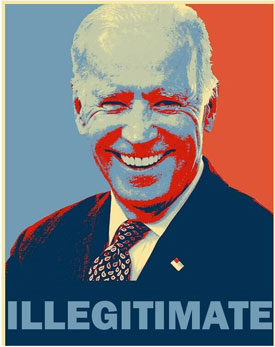
The 2020 election in particular, and our electoral process in general, have been badly compromised.
First there have been the successful efforts by Democrats to loosen electoral administration standards and practices by legalizing ballot harvesting (where partisan “volunteers” go out and collect ballots as well as “assist” voters in filling out their ballots), allowing same-day voter registration, mass mail-in voting, and the like. On the flipside we have Democrats tenaciously fighting any efforts to shore up the integrity of the system, such as requiring ID and proof of citizenship to vote.
Couple all of this with unprecedented last minute rule changes on the eve of what was sure to be the most contested election in generations, if not in American history: all changes designed to favor one side over the other.
Theoretically, none of these measures guaranteed a compromised vote. Theoretically, it’s possible that a system designed to be gamed and abused won’t be. But a party concerned about the integrity of the system wouldn’t expend so much effort making it easier to rig elections; it would do the opposite. The other party, the one trying to do exactly that (if all too often in a desultory, half-hearted way) nevertheless gets attacked as the enemy of “democracy.”
No matter what he does, President Trump will get no credit from his enemies, who are already demanding that he concede before the counting is even over—to say nothing of the lawsuits and potential recounts. If he does, a new standard will have been set, or an old one reaffirmed: in any close election, if the Democrat appears to be ahead, and irregularities appear to be present, they are to be dismissed as nonexistent and the Republican must go gently into that good night.
That may well work in securing the White House this time. But if they just ram this through without explaining what really happened, then the legitimacy not just of our electoral system but of our entire government will have suffered an extreme, and possibly fatal, blow.
No one will really know who won. Partisans on both sides will insist they do, but they won’t—not really. Unless all the anomalies are explained, every count and recount conducted in a fair and transparent manner, the occupant of the White House on January 20, 2021—whoever he is—will sit under a cloud. If he’s Joe Biden, that cloud will be entirely of his party’s own making.But far more ominously, one half the country—or to be more precise, the class that rules in the interests of (at most) half the country—will surmise that it can rule by fiat. The other half will conclude that they are subjects.
Whether that conclusion resigns the latter to apathy or stirs them to rebellion is the question that will determine the course of our politics going forward.
Agreed, right down the line. The past week’s heinous events have revealed what kind of country America really is. From here on out, we will find out what kind people Americans really are—or if they can still rightly even call themselves Americans at all. I shudder to contemplate what the answer will be. The only thing we can all be certain of is that nothing will ever be the same again. No matter what, politics, elections, the people, their relations with each other, the country as a whole, EVERYTHING has changed—profoundly, irrevocably, and NOT for the better.
Update! Bill, too, is taking stock.
You know, the real problem here isn’t that we have embarrassed ourselves. It is that the Ruling Class and its Ruling Party – the American Oligarchy, in other words – has come out of the shadows in which it customarily operates and, on the third try, managed a naked, but successful coup against Donald Trump.
People thought this was a game. They thought there were rules. There weren’t. There was only win, or lose, and they intended to win.
As I predicted, the tech oligarchs shut down all effective opposition to the coup on their platforms, and put all their expertise to work guaranteeing the success of the coup. The Enemy Media (and that part of the media we thought was not the enemy, but it was too), went all in. The billionaires opened their wallets wide and poured a tsunami of money into the cause. And the politicians loosed Blackshirt storm troopers onto our locked down cities, while we cowered behind closed doors, afraid to breathe free air because of a plague that doesn’t actually exist.
Nor did the designers of the coup intend to settle for half measures. Apparently now control of the Senate is at risk as well. Bucket loads of late ballots manufactured from God knows where are flowing into states in the middle of the night, and suddenly a Senate majority that looked safe for the GOP is teetering on the brink. Make no mistake, if the Senate ends in a tie, Kamala Harris will be there to decide every tie vote to favor the Democrats.We will end up with a Democrat sweep of the House, the Senate, and the Presidency.
And then they’ll do away with the filibuster in the Senate, pack the Supreme Court, and start to work on rendering the constitution itself an irrelevant document. The Second Amendment? Forget about it. And if you think the cops won’t enforce the gun confiscation orders from their bosses, well, you probably thought our elections were honest, too.
And we will take it. We will accept the new order. Why? Because we have become a weak and flaccid nation, addicted to the numb buzz of our social media habits, brainwashed by the tech lords and the media minions of the progressive juggernaut. Our Founders bet their lives, fortunes, and sacred honor on America. We won’t risk the time it takes to get out of our chairs, away from the juice of FB and Twitter wired directly into our brains, or ten bucks out of our wallets to support candidates who support America. As for honor, that’s so old fashioned. We don’t do honor any longer. And our children have been “educated” to despise everything America once stood for.
We didn’t lose our nation this week. We lost it years ago. And the GOP helped.
Sad to say, I can’t argue with any of that either. As I said last night: although the long downhill slide began long before, we lost our country fully and for good back in the 60s when we complacently declined to kick Proggy Red’s scroungy ass to the curb, tacitly granting space for his diseased ideology to fester and metastasize. The Founders explictly laid out what would ensue should Americans ever relax their vigilance and become derelict in their duty to defend liberty, to “preserve its blessings for themselves and their posterity.” And now their warnings have been realized, their prescient genius confirmed for all time.
All that’s left now is to pay the tab for that gross laxity. It ain’t gonna be fun.










 - Entries