
What must be done?
As I said: there IS a forward, be it ever so dark and difficult, and Bill knows what it is.
What we most need today is honesty with ourselves, about what we have lost, where we are now, how we got here, and where we need to go, and what we need to do going forward.
We see damned little of any of it these days on the patriotic right.
We need to understand that our purported “champions” were not that. George W. Bush was playing for the New World Order team, not ours. He still is. As only befits a scion of CIA family. He created the massive security state that holds us in an iron grip of tyranny today.
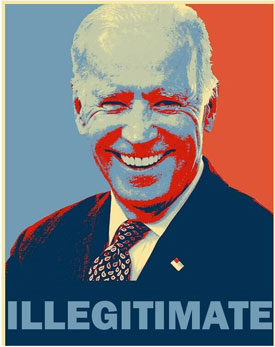
Barack Obama, likely not even an American citizen, let alone an American, was, and is, playing for the communist Islamic team. He wrecked our economy, and it has still not recovered. He continues, behind the scenes, to pull the strings of the “Biden Administration,” which is both wrecking our economy today, and tightening the grip of tyranny.
Donald J. Trump seems to have meant well, and made some small improvements for a short time, but in the end was ineffectual, and his improvements were swept away as he was swept out of office by treachery and fraud, both of which he seemed unable to either anticipate or counter.
We don’t even know who the “Biden Administration” really is. My guess is a cabal of unbelievably rich, evil men working through Obama, Hillary Clinton, or both.
Whatever, they have wrecked our country beyond redemption. There will be no coming back to the good old days from where we are now. In truth, the issue now is not such a return, but brute survival. Will the United States survive as either a state, or as a union?
No, we are not going to vote our way out of this, because the rot extends far beyond the abilities of the ballot box to reach, even if our elections had not been almost entirely poisoned by the fraud of the regime. The permanent ruling class never comes up for a vote at all. The communist academicians who poison our youth are never elected, and cannot be removed by voting them out.
What we face is a regime that hates us and seeks to destroy us.
Angelo Codevilla explains what that means:
Regimes, as serious people know, are a lot more than governments. They are the priorities, standards, ways of life, embodied by the most prominent persons in the land, and very much by their henchmen.
In other words, our American regime is the American ruling class and its henchman. This would include most of the elected government, almost all of the permanent bureaucratic government, the spy complex, their henchmen in academia, the churches, the media/propaganda industry, the medical/pharma industry, and, most of all, the multi-billionaire oligarchs who control and direct the entire choir.
The next question we must face is both repellant and crucial. And, again, Codevilla provides the answer:
who are the people whose deaths would diminish it?
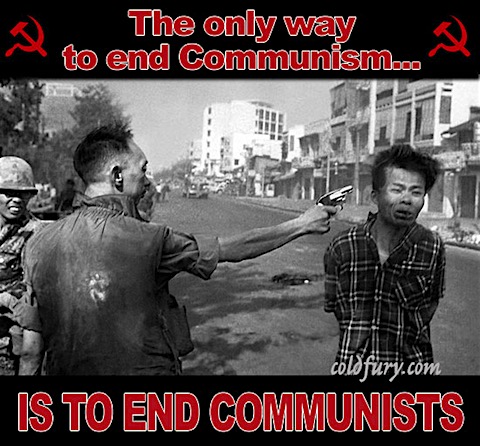
That is, who must patriots kill to end the stranglehold the current American regime has on our throats and lives?
No one should declare war without being clear against whom it is being declared: who the enemy is whose demise will give us peace.
Here is Codevilla’s answer:
It is enough for our peace that there be people who have their own reasons for destroying the people and culture—the regimes—that are the effective causes of violence against us.
The people and culture – the regimes.
Because that is what a regime is – a class of people with a similar culture. Our ruling class, for instance, has a culture of dominance, socialism-communism, authoritarian tyranny in pursuit of its goals, corruption, mind control, lies and propaganda, and ubiquitous power expressed through the organs of a controlling oligarchy of very rich men. Everyone who shares this culture is a member of the regime.
Therefore, the question becomes, how many of these people must we kill to give us freedom?
How biting and cruel the irony, that flinching from committing wholesale blood and slaughter all across the Moslem world would ultimately force us into a position whose toils can only be escaped by committing wholesale blood and slaughter against non-Moslems right here at home? Somewhere, Loki the Prankster must be laughing his ass off.
 1
1











 - Entries