
All hail the one, the only, the all-American Zippo.
Zippo Lighters: The Vietnam War Icon
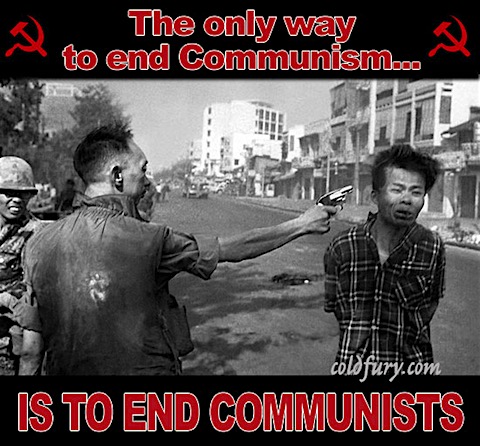
During the Vietnam War, the trend of personalized the Zippo lighter emerged. Soldiers, with the assistance of local artists in Vietnam, began engraving their Zippos with various slogans. These engravings frequently carried a tone of sarcasm or expressed anti-war sentiments. This practice of customizing lighters gained popularity, as engraving messages on the metal casings of Zippos became a widespread phenomenon.The Zippo lighter is a simple yet functional item, made of chrome-plated brass and measuring 2.2 inches in height with a weight of 2.05 ounces. It’s designed for efficiency, capable of being opened and lit with a single, practiced movement, and emits a satisfying ‘thwink’ sound upon being snapped shut.
However, during the Vietnam War, Zippos transcended their role as mere lighters. They became symbolic, much like the crests on medieval knights’ armor, bearing slogans that reflected the soldiers’ internal views on what many felt was a futile mission.
These lighters were comparable to tattoos in their personal significance. The custom engraving was often done in small, makeshift shops by the roadside.
Comparable to tattoos? Well, much as I’ve always loved my Zippos, let’s not get nuts here about this. A tattoo represents much, much more in the way of personal commitment, sacrifice, and dedication than a lighter purchasable in any truck stop for about 14.95.
History
The origins of the iconic Zippo lighter trace back to 1932 in Pennsylvania. George G. Blaisdell observed a friend struggling with a bulky Austrian-designed lighter, which was cumbersome and required two hands to operate, though it had a sturdy flame protected by an internal chimney.Blaisdell set out to refine this design. His initial model retained the protective chimney but was more compact and stylish. He added a hinge connecting the lid to the base, allowing for one-handed operation. These innovations quickly popularized his creation, which he named the Zippo.
In 1936, Blaisdell patented his lighter design and offered a unique guarantee, promising to repair any defective Zippo at the company’s expense. The Zippo’s legacy was profoundly shaped by two major conflicts: World War II and the Vietnam War.
With America’s entry into WWII in 1941, Blaisdell ceased commercial production of Zippo lighters, focusing instead on supplying American soldiers. Due to wartime restrictions, the Zippo factory used lower-grade metal, and the lighters were given a protective “black crackle” finish.
Someplace around here I should have one of those wrinkle-black Zippos, I believe, althought not WW2 vintage; my friends, incredible as it may seem, even I am not that fuckin’ cool. My current favorite Zippo amongst the ten or twelve I still have would have to be this ‘un:

Okay, okay, allow me to adjust my previous statement a wee mite: I AM pretty danged cool after all.
A-HENH.
The Vietnam/Zippo chronicle continues at the link, featuring many snaps of those custom-engraved, jungle-dwelling, hooch-torching Zips of yore. It’s a fascinating tale, of which you should read the all.
 2
2 1
1







 - Entries
I love those damn lighters just because they are all American.
This one also has its charms: